- Category: Brokerage Business
Introducing Broker & Multi-Tier IB System: Complete 2026 Guide
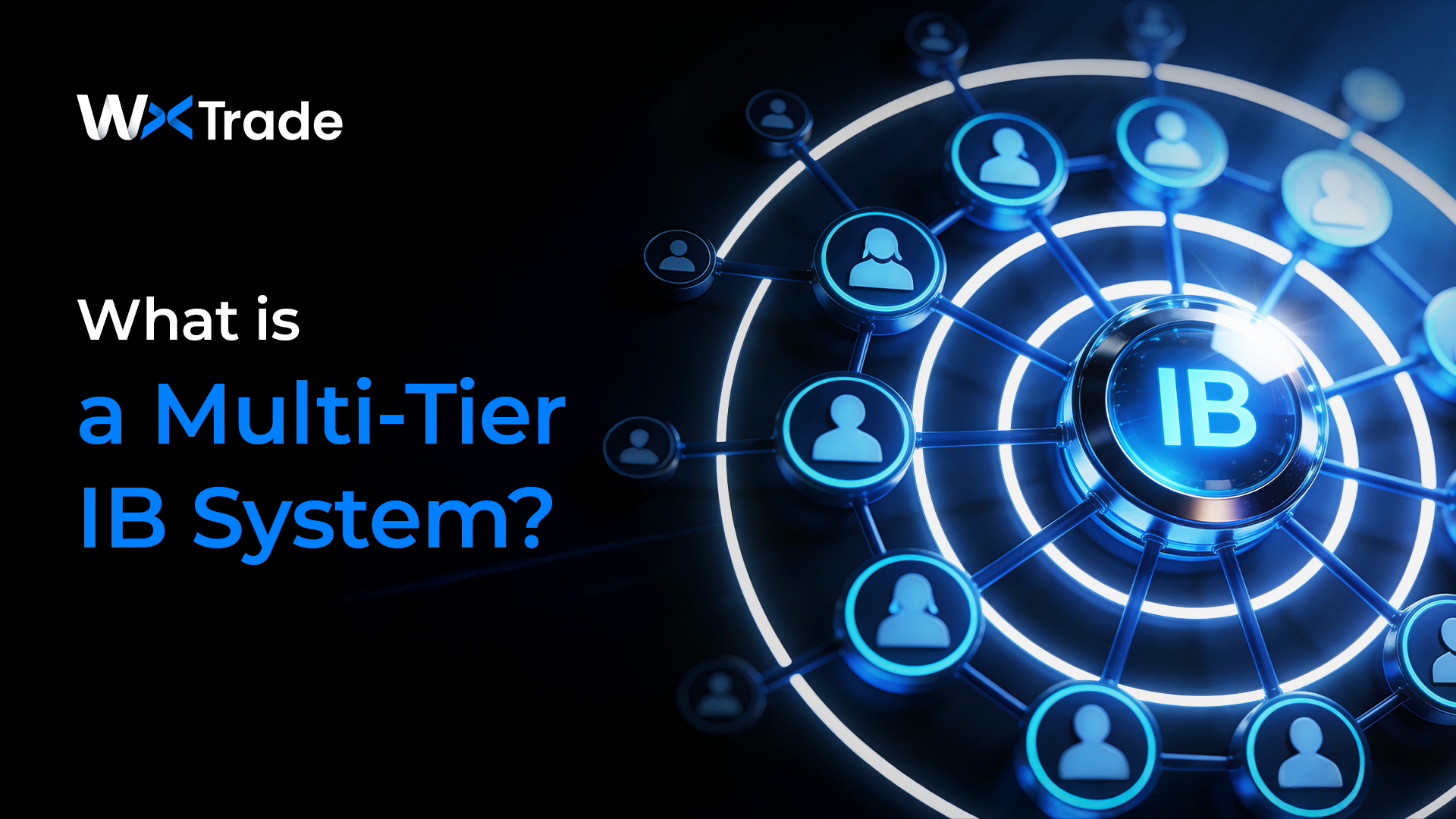
This guide explains what an introducing broker is, how multi-tier IB systems work, and why they matter in 2026. This guide is designed for brokers, aspiring introducing brokers, and traders interested in partnership programs. Understanding these systems is crucial for maximizing earning potential, ensuring compliance, and building sustainable trading networks. Whether one is a brokerage owner seeking to expand client base, a prospective IB aiming to build a profitable network, or a trader considering partnership opportunities, a detailed understanding of introducing broker and multi-tier IB system infrastructure is essential.
What Is an Introducing Broker (IB)?
The IB system fits between traders and brokerages as a relationship layer, not an infrastructure layer.
An Introducing Broker (IB) solicits or accepts orders for futures, forex, or securities, acting as an intermediary between clients and larger clearing firms. In the U.S., IBs are required to register with the Commodity Futures Trading Commission (CFTC) and are regulated by the National Futures Association (NFA), ensuring compliance with industry standards. An introducing broker (IB) acts as an intermediary between clients and futures commission merchants (FCMs), focusing on client relationships and trading strategies while leaving trade execution to the FCMs.
Unlike a simple affiliate earning a one-time referral fee, a professional IB provides ongoing education, local support, and guidance to clients throughout their trading participation. Market participants considering futures trading require comprehensive understanding of market dynamics and contract specifications before participation.
Key distinctions in 2026:
-
Relationship depth: IBs construct communities, conduct webinars, and deliver market analysis—affiliates typically do not provide these services.
-
Registration requirements: In regulated markets, IBs are required to be registered with the Commodity Futures Trading Commission (CFTC) and regulated by the National Futures Association (NFA) in the U.S., ensuring compliance with industry standards; FCA, CySEC, and DFSA maintain parallel frameworks.
-
Funds handling: IBs never hold client cash, securities, or margin—transactions flow directly to the futures commission merchant or clearing broker.
-
Tech integration: Modern IBs access client portals, CRM tools, and reporting dashboards through SaaS platforms.
The primary role of an introducing broker involves matching clients (including investors) seeking access to futures markets with FCMs, enabling IBs to provide personalized services while leveraging the FCM’s infrastructure for trading. IBs facilitate transactions between clients and brokers and may assist clients in gaining better understanding of contract specifications. Introducing brokers typically earn commissions based on the trading activity (transactions) of the clients they refer, generating income without handling technical aspects of trade execution.
With a clear understanding of introducing broker functions, the analysis proceeds to the key functions and responsibilities that define their role in the trading ecosystem.
Key Functions and Responsibilities of an Introducing Broker
IBs function as relationship builders and local market operators. Their value derives from client access, not platform operations.
Prospecting and Onboarding
-
Attracting traders through seminars, social media, and local networks
Explaining Trading Conditions
-
Clarifying spreads, swaps, leverage, and account types
KYC Facilitation
-
Assisting clients with registration and compliance documentation completion
Ongoing Education
-
Conducting trading rooms, signals services, risk management training, and providing educational resources and support to assist beginners and students in market navigation
Customer Support
-
Providing assistance in local languages across countries. IBs also function as intermediaries and help resolve technical issues or platform-related questions between the client and clearing firm.
Market Analysis and Trading Tips
-
Providing market analysis, trading tips, and educational resources to assist beginners in navigating complex derivatives or forex markets.
Volume Tracking
-
Monitoring trading activity and coordinating campaigns with the broker’s partner manager
Compliance Discipline
-
Following AML/KYC rules and respecting GDPR-like data protection requirements
IBs essentially manage the human side of trade relationships while the broker handles execution, custody, and platform infrastructure.
With these responsibilities in mind, the analysis explores how IB structures have evolved from single-level to multi-tier systems.
From Single-Level IB to Multi-Tier IB System
A traditional single-level IB earns commissions exclusively from directly referred clients. Growth remains linear and limited by personal capacity.
A multi-tier structure modifies this equation entirely. It introduces hierarchical earning potential through sub-IB relationships:
-
Master IB: The top-level partner who recruits both traders and other IBs
-
Sub-IB: Partners recruited by the Master IB who introduce their own clients
-
Commission layers: Level 1 (direct clients), Level 2 (sub-IB clients), Level 3+ (deeper downlines)
The multi-tier IB program enables partners to construct networks of sub-IBs, allowing commission generation from direct referrals and from clients introduced by their partners.
Consider a Master IB based in the Middle East with sub-IBs operating in India and Nigeria. Each sub-IB onboards local traders. The Master IB earns overrides on all trading volume generated by this network—creating scalable growth without personally servicing every account.
In a multi-tier IB structure, earnings can increase significantly as partners earn direct commissions from their referrals and a portion of the commissions generated by their sub-IBs’ clients. Commissions typically decrease per tier, but total earnings can multiply as the network expands. This structure requires robust tracking software to attribute trades correctly and prevent disputes.
Now, the analysis examines how these multi-tier systems operate in practice.
How a Multi-Tier IB System Works in Practice
The system combines a business model with technical infrastructure for tracking, calculating, and distributing commissions.
Typical operational flow:
-
IB registration: Partner completes verification and receives back office access. The futures commission merchant (FCM) or broker handles back office operations such as trade settlement, compliance, and account management, allowing introducing brokers (IBs) to concentrate on client relationships and advice.
-
Referral link generation: Unique codes attribute new accounts to specific IBs
-
Trader onboarding: Clients register through IB links and complete KYC
-
Sub-IB recruitment: Master IBs invite educators or local partners as sub-IBs
-
Trade execution: Clients trade on MT4, MT5, cTrader, or other platforms
-
Volume logging: Every lot traded is recorded against the correct IB node
-
Commission calculation: Rules engine applies rebates and revenue share percentages
-
Payout cycle: Daily, weekly, or monthly payments based on agreement
Common payout models include per-lot rebates ($10 per standard lot), revenue share (30% of spread), hybrid structures, and performance tiers that increase rates at volume thresholds.
Partner modules provide an “IB tree” view displaying exactly how volume and earnings flow through each tier.
Understanding the operational flow, one can now examine the benefits these systems offer to both IBs and brokers.
Benefits of Multi-Tier IB Programs for IBs and Brokers
Multi-tier IB programs have established dominance as a growth model and competitive advantage within the industry, aligning incentives across the network.
Benefits for IBs
-
Scalable income from direct and indirect client volumes
-
Partial passive income once the network stabilizes
-
Opportunity to construct personal brands through academies and community resources
-
Access to professional-grade analytics and dashboards
Benefits for Brokers
-
Organic client acquisition reducing dependence on paid advertising
-
Enhanced regional penetration through local partners who understand markets and where CFD traders are reshaping global markets
-
Higher client lifetime value from closer support and education
-
Lower cost per acquisition compared to pure digital marketing
Multi-level IB systems enable brokers to create hierarchical partner networks, facilitating organic growth through relationships rather than relying solely on direct acquisition channels.
Master IBs who mentor sub-IBs and conduct training programs create stable ecosystems. Brokers manage complex rebates across asset classes, currencies, and regions from a single environment, especially in markets where CFD traders are reshaping global markets.
With these advantages established, the analysis examines the common structures and commission models used in multi-tier IB programs.
Common Structures: Tiers, Levels, and Commission Models
Not all multi-tier programs offer unlimited depth. Many brokers limit levels for control and compliance.
Typical structures in 2026:
|
Structure |
Use Case |
Commission Logic |
|---|---|---|
|
2-tier |
Simple programs |
IB + Sub-IB only |
|
3-5 tier |
Network builders |
Graduated overrides |
|
Unlimited depth |
Volume-controlled |
Thresholds gate access |
Commission examples:
-
Level 1: $12-20 per FX lot or 30-40% revenue share
-
Level 2: $3-5 per lot or 10-15% share
-
Level 3+: $1-3 per lot or 3-10% share
Advanced systems enable Master IBs to customize override amounts passed to sub-IBs. Different asset classes—forex, indices, stocks, crypto—often maintain separate commission tables managed centrally through specialized forex CRM tools.
With an understanding of commission structures, the analysis explores the technology that powers these systems.
Technology Behind a Modern Multi-Tier IB System
The primary challenge in 2026 involves operating tier models at scale without errors or payment delays.
Essential system components:
-
Multi-level hierarchy engine: Stores IB relationships, tier levels, and commission rates
-
Real-time trade feeds: Integration with MT4/MT5, cTrader, DXtrade, and TradingView APIs
-
Rules engine: Automates commission calculations and performance tier adjustments
-
Partner CRM: Role-based access for Master IBs, sub-IBs, and broker staff
-
Payout modules: Reconciliation with payment gateways (cards, wires, e-wallets, crypto)
-
Enterprise security: Encryption, audit logs, and anti-fraud detection
With appropriate technology established, risk management and compliance considerations ensure sustainable growth.
Risk Management, Compliance, and Regulatory Considerations
Regulators including ESMA, FCA, CySEC, and ASIC have increased scrutiny of IB structures since 2024.
Key compliance requirements:
-
Accurate marketing: No guaranteed returns or misleading income claims
-
Leverage restrictions: Honoring caps by region (30:1 for EU retail, for example)
-
KYC/AML procedures: Rigorous verification for all clients, regardless of IB source
-
Data protection: GDPR compliance when handling client information
The risk of over-incentivized networks—where high rebates encourage churn or bonus abuse—requires monitoring. Proper SaaS platforms set compliance flags per country, control available instruments by region, and maintain auditable logs for regulators.
IBs operating globally should understand basic regulatory frameworks where their clients reside, even when the broker holds a license in a different jurisdiction, especially when supporting brokers that are starting a regulated CFD forex brokerage.
With compliance and risk management addressed, the analysis discusses how to design a competitive multi-tier IB program for brokerages.
Designing a Competitive Multi-Tier IB Program for Brokerages
For brokerage owners launching or upgrading IB programmes in 2026, strategic planning determines success. Incorporating ongoing research and collaborative studies—such as those conducted by university researchers—can help evaluate the development, quality, and impact of IB programmes and services, ensuring continuous improvement.
Key Questions to Address
-
Target markets: Which regions, languages, and trader segments?
-
Partner profile: Educators, influencers, money managers, or institutions?
-
Compensation model: Per-lot rebates, revenue share, or hybrid?
-
Technology: Build in-house or deploy SaaS?
Recommended Practices
-
Establish clear partner tiers (Standard IB, Master IB, Regional Representative) with transparent upgrade criteria
-
Construct partner-facing assets: branded portal, marketing materials, training academy
-
Provide localized support across multiple languages
-
Focus on long-term growth metrics, not solely sign-up volume
Ready-made partner management modules with open APIs can reduce time-to-market and decrease development effort.
Once program design is complete, the analysis addresses best practices for growing and managing IB networks.
Best Practices for IBs: Growing and Managing a Multi-Tier Network
Long-term IB success derives from sustainable practices, not short-lived promotion spikes.
Network-building Tactics
-
Lead with education (courses, webinars, trading rooms) before sales
-
Construct local communities through WhatsApp, Telegram, or regional meetups
-
Partner with educators who can become productive sub-IBs
Ethical Marketing Discipline
-
Avoid messaging that damages trust
-
Disclose risks and regional restrictions clearly
-
Align all materials with broker compliance guidelines
Operational Habits
-
Use the broker’s portal to track performance in real time
-
Segment top-performing versus inactive partners
-
Conduct periodic reviews of commission plans and network profitability
Structured platforms provide IBs with accurate statistics, tier information, and payment history in one location—building trust with both the network and the broker.
Before concluding, the analysis considers potential conflicts and risks for clients when working with IBs and multi-tier systems.
Potential Conflicts and Risks for Clients
While introducing brokers and multi-tier IB systems offer significant benefits, clients should recognize potential conflicts and risks:
-
Product Recommendations Driven by Commissions: IBs may prioritize recommending specific products or brokers that offer them higher commissions rather than those that best fit the trader’s objectives.
-
Incentives for High-Frequency Trading: The commission structure may incentivize IBs to encourage high-frequency trading, which might not always align with the client’s best interests or trading strategy.
-
Regulatory Oversight: In the U.S., IBs are required to register with the Commodity Futures Trading Commission (CFTC) and are regulated by the National Futures Association (NFA), ensuring compliance with industry standards. However, clients should always verify the regulatory status of their IB and understand the protections in place.
By understanding both the advantages and the potential risks, clients can make informed decisions when engaging with IBs and multi-tier partnership programs.
FAQ
Is an introducing broker the same as an affiliate?
No. IBs maintain deeper, ongoing relationships with clients including education, support, and account management. Affiliates typically earn one-time referral fees.
How many tiers are ideal for a forex IB program?
Most regulated brokers use 2-5 tiers. Unlimited depth models exist but require volume thresholds and compliance controls.
Can Master IBs customize sub-IB commissions?
Yes. Advanced platforms enable Master IBs to determine what percentage of their override passes to sub-IBs.
How are commissions calculated and paid?
Systems log trading volume per account, apply commission rules, and process payouts daily, weekly, or monthly based on the agreement.