Key Takeaways
An offshore brokerage license allows a forex broker to launch faster and with lower capital than in top-tier onshore jurisdictions, while still operating under a licensed legal framework. Startups favor offshore brokerage licenses due to their lower costs and faster market entry compared to Tier-1 jurisdictions like the US or UK.
In 2026, the most used offshore centers for a forex broker license remain Seychelles, BVI, Vanuatu, Mauritius, and St. Vincent & the Grenadines, each with different capital requirements, bankability, and credibility levels.
Obtaining an offshore forex license is only one pillar of a serious forex business; a complete launch also requires a business plan, trading platform, CRM, payment system, risk management, and compliant KYC/AML processes.
Offshore licensing can support a multi-license strategy: a brokerage firm may start offshore to validate the brokerage business model, then expand to CySEC, FCA, ASIC, or other onshore regulators as volumes grow.
WxTrade does not sell licenses; WxTrade provides SaaS trading infrastructure, including a client portal, CRM, risk dashboards, payment integrations, and compliance tools that support bankable offshore brokerage business operations.
Introduction: What Is an Offshore Brokerage License in 2026?
An offshore brokerage license is an authorization issued by an International Financial Center that permits a legal entity to provide forex trading, CFD trading, and related financial services to international clients from a flexible, often low-tax offshore jurisdiction. Offshore licenses are typically obtained from International Financial Centers and are known for having more relaxed regulatory requirements compared to onshore licenses, which are issued by established financial centers with strict regulations.
The terms offshore brokerage license, offshore forex license, and offshore forex broker license usually refer to the same licensing concept: an investment dealer, securities dealer, money broking license, or financial services permission that allows a forex brokerage to operate legally. According to the BIS 2022 Triennial Survey, the foreign exchange market reached about $7.5 trillion in daily turnover, which explains why fintech founders continue to enter the forex market through cost-efficient structures.
This guide compares onshore and offshore licensing, outlines the licensing process, explains capital requirements, and shows how SaaS trading infrastructure such as WxTrade fits into a compliant forex brokerage business. It is written for fintech founders, existing forex brokers, CFD operators, digital asset brokers, fund managers, and companies planning to add forex trading under an offshore broker license.

Onshore vs Offshore Licensing: Strategic Choice for a Forex Business
Tier-1 Jurisdiction
Onshore License
- Capital from USD 20M+ in the USA and Japan; EU investment firms typically EUR 125,000–730,000 depending on activity scope
- Physical office presence and qualified local staff mandatory in most jurisdictions
- Detailed fit-and-proper review, suitability obligations, and ongoing FCA, ASIC, or CySEC compliance reporting
International Financial Centre
Offshore License
- Capital from USD 25,000 at entry-level IFCs to USD 100,000–250,000 in more established offshore centres
- Non-resident shareholders, international directors, and simplified holding structures typically permitted
- Simpler ongoing reporting, fewer leverage restrictions, and flexible corporate structuring with beneficial ownership disclosure
Established Regulatory Framework
Speed & Banking Access
- Licensing timelines of 12–24+ months are typical for FCA, ASIC, CySEC, and SEC-equivalent applications
- Strong banking access, institutional confidence, and ability to accept regulated EU or UK retail clients directly
- Mandates ongoing MLRO, compliance officer, board governance, and capital adequacy reporting
IFC Advantage
Speed & Growth Path
- Realistic licensing timeline of 3–6 months in credible offshore centres such as Seychelles, BVI, and Mauritius
- Lower annual fees, broader commercial flexibility, and faster market entry before onshore expansion
- Foundation for a phased multi-license strategy: validate offshore, then apply for CySEC, FCA, or ASIC when volumes grow
Onshore jurisdictions such as the United Kingdom, the United States, Australia, Japan, and the european union provide strong regulatory credibility, but their regulatory framework is expensive and demanding. The United Kingdom, regulated by the FCA, is considered a top-tier jurisdiction for forex broker licensing due to its global credibility and access to international banking. Cyprus is a popular EU jurisdiction for forex brokers, known for its moderate capital requirements and the ability to passport services across the EU.
Obtaining an onshore forex broker license typically requires a detailed business plan, substantial financial resources, qualified personnel, and compliance with KYC and AML regulations. Onshore jurisdictions, such as the USA and the UK, impose strict regulatory standards and compliance requirements, including the need for a physical office and a significant amount of capital, which can be a barrier for new brokers. Many onshore regulators mandate that forex brokerage firms maintain a physical office presence and staff in their jurisdiction to ensure closer supervision and control over operations.
In jurisdictions like the USA and Japan, securing a forex broker license requires proof of at least $20 million in accessible capital, alongside strict reporting requirements. By contrast, obtaining an offshore forex broker license is generally faster and involves lower fees and capital requirements than acquiring an onshore license, which often requires significant financial resources and compliance with rigorous standards. The licensing process for offshore brokerage licenses can often be completed in 2 to 4 months, whereas onshore processes may take much longer.
The trade-off is clear. Onshore licenses can improve institutional confidence and banking access, while offshore licenses support faster launch, lower annual fees, and broader commercial flexibility. Since 2018–2024, however, FATF and OECD pressure has moved several offshore centers away from purely light-touch models; Vanuatu and Seychelles now place more emphasis on substance, fit and proper checks, and local governance.
A phased strategy is common in the forex industry: launch with an offshore brokerage license, prove the forex company can operate with clean reporting and stable client flows, then apply for an EU, UK, or other onshore license when the forex brokerage business reaches consistent profitability.
Main Advantages of an Offshore Forex Brokerage License
Offshore forex licenses remain relevant in 2026 because they reduce early regulatory friction without removing the need for lawful conduct. Operating under a licensed framework allows forex brokers to legally conduct business globally, which can lead to increased market reach and client acquisition, provided the broker respects restrictions in foreign jurisdictions and avoids unauthorized solicitation.
The licensing process is faster. Obtaining a forex license can take anywhere from 2-4 weeks to several months, depending on the jurisdiction and the complexity of the application, although a realistic end-to-end timeline for established offshore centers is usually 2–6 months.
Initial costs are lower. Seychelles Securities Dealer permissions and BVI Category 3 Investment Business licenses generally have lower minimum capital requirements than EU investment firm licenses. Seychelles is recognized for its very low capital requirement and fast licensing process, making it one of the most popular entry-level forex licenses globally.
Corporate structuring is flexible. Many IFCs allow non-resident shareholders, international directors, and simplified holding structures, subject to fit and proper review and beneficial ownership disclosure.
Trading rules can be more commercial. Offshore regulators typically have simpler reporting compliance and fewer restrictions on trading mechanisms, allowing higher leverage for clients.
Tax treatment may support reinvestment. Many offshore jurisdictions offer low or zero corporate tax rates, allowing businesses to reinvest more of their profits. Offshore brokerage licenses permit businesses to facilitate a wide range of financial services globally while benefiting from relaxed regulatory and tax environments.
Obtaining a forex license can significantly enhance a brokerage’s reputation and client trust, as it demonstrates compliance with regulatory standards and legal requirements. At the same time, serious offshore brokers increasingly adopt onshore-style controls: segregated client funds, clear disclosures, withdrawal governance, security monitoring, and auditable CRM records. WxTrade supports these controls through platform configuration, client onboarding workflows, risk dashboards, and activity logging.
Key Offshore Jurisdictions for Forex Broker Licenses in 2026
Entry-level IFC
Seychelles (FSA)
Regulated by the Seychelles Financial Services Authority under a Securities Dealer framework. In 2026, dealing category minimum capital moved to USD 100,000, with net liquid capital at the higher of USD 50,000 or 10% of average annual expenses. Processing typically completes in 3–6 months. Suits startups with clear ownership and strong compliance infrastructure.
This section reviews common jurisdictions for obtaining a forex broker license, with emphasis on operational value rather than headline price. Common offshore jurisdictions for brokerage licenses include Seychelles, Mauritius, and Belize, known for their faster processing times and lower initial capital needs. Belize has historically been associated with the international financial services commission model, although brokers must verify the current status, regulator name, and scope before relying on any permission.
Seychelles is a leading Securities Dealer hub regulated by the seychelles financial services authority. A seychelles forex license has historically been attractive because minimum capital was far below EU thresholds and processing could be completed in about 3–6 months. In 2026, Seychelles increased scrutiny: the dealing category minimum capital moved to USD 100,000, and net liquid capital must generally meet the higher of USD 50,000 or 10% of average annual expenses. Seychelles suits startups that combine clear ownership, strong internal compliance, and reliable technology infrastructure.
BVI operates under the BVI Financial Services Commission and its Securities and Investment Business Act framework. A Category 3 investment license is used for dealing in investments as principal or agent and can serve brokers targeting non-EU retail forex markets. Capital is usually discussed in the mid-five or low-six figure USD range depending on structure, activity, and regulatory assessment.
Vanuatu is a popular choice for forex brokers due to its simplified regulatory process and cost-effectiveness, although it has lower credibility compared to other jurisdictions. The vanuatu financial services commission has tightened oversight since reforms around 2019–2021, including more attention to physical presence, local office substance, and management accountability. A vanuatu forex license can still be fast, but it is no longer a paper-only route.
Mauritius offers a favorable environment for forex brokers with its strong financial services sector and access to double taxation treaties, making it an attractive licensing jurisdiction. The financial services commission in Mauritius issues Investment Dealer licenses, including Full Service categories. Mauritius is often viewed as a hybrid between an offshore jurisdiction and a mid-tier financial sector center because it offers treaty access, substance expectations, and a more developed compliance environment.
Labuan also appears in multi-license planning. The labuan financial services authority supervises labuan financial services activities, and a money broking license can be relevant for certain institutional or intermediation models. Labuan is not identical to a retail CFD license, so legal analysis must confirm whether the planned trading business fits the permission.
St. Vincent & the Grenadines remains a common offshore company domicile, but it should not be treated as a full forex broker license jurisdiction. Since 2023–2024, SVG has required forex companies to show licensing from approved foreign authorities rather than relying on SVG registration alone.
Jurisdiction choice should follow the business plan: target market, leverage, product scope, marketing channels, liquidity providers, banking partners, tax liability, and the planned road map toward other jurisdictions.
Capital Requirements and Cost Structure for an Offshore Brokerage
Capital requirements differ sharply across offshore centers and directly affect the launch budget for a forex brokerage. Some entry-level IFC structures start around USD 25,000, while more established centers or broader dealing permissions may require USD 100,000–250,000 or more. The term minimum capital refers to paid-up funds that the broker must maintain, while minimum capital requirements may also include liquid capital, expense ratios, or continuing reserves.
The main cost blocks include paid-up share capital, application and government fees, legal drafting, corporate services, compliance manuals, technology setup, audit, annual fees, and renewal charges. The broker pays these costs before revenue becomes predictable, so financial projections should include 12–18 months of operating runway.
Regulators often require proof that capital is deposited in a corporate account or approved bank account before the forex license is granted. A corporate account may be opened with a local bank, international bank, or EMI, but banking partners usually request ownership charts, source-of-funds documents, licenses in progress, and a description of expected payment flows.
Beyond regulatory capital, a realistic business plan should allocate funds for trading platform infrastructure, CRM, staff, compliance, marketing, liquidity providers, chargeback reserves, audit, cybersecurity, and customer support. Underfunded offshore brokers often fail because statutory capital covers licensing but not withdrawal surges, platform incidents, negative client events, or regulatory audits.
Licensing Process for an Offshore Forex Broker License
The Offshore Licensing Process
Click any step — what to prepare and when
Incorporate the legal entity
Form the brokerage as an offshore company or local company as required by the regulator. Assemble ownership charts, UBO information, director documents, beneficial ownership disclosures, and source-of-funds evidence from all key stakeholders.
Weeks 1–3Prepare the business plan
Define target markets, client profiles, products (spot FX, CFDs, crypto-CFDs), leverage policy, revenue model, and 3–5 year financial projections. Explain the A-book, B-book, or hybrid execution model and how client funds will be segregated and protected.
Weeks 2–5Draft compliance policies
Prepare AML, KYC, risk management, outsourcing, client funds, complaints, and execution policy documentation. Define MLRO reporting lines, sanctions screening procedures, enhanced due diligence for high-risk countries, and transaction monitoring workflows.
Weeks 3–6Submit to the regulator
File application forms, government fees, constitutional documents, compliance manuals, personal documentation (notarized passports, proof of address, bank references, CVs, police clearance certificates), and capital deposit evidence with the relevant regulatory authority.
Weeks 6–10Answer regulator questions → go live
Respond to regulator queries on ownership, business operations, technology stack, market maker policy, and liquidity arrangements. Use this waiting period to configure your trading platform, CRM, KYC workflows, and payment integrations so operations are ready within weeks of license approval.
Months 2–6Ready to configure your stack
Get your platform ready before your license lands
WxTrade configures during your regulator review — so you go live within weeks of approval.
The offshore licensing process is simpler than in the largest onshore markets, but it still requires structured documentation and evidence of clean origin of funds. The application process for obtaining a forex broker license typically involves submitting a detailed application to the relevant authority, meeting minimum capital requirements, and proving compliance with KYC/AML regulations.
The usual process includes:
- incorporating the brokerage business as a legal entity, often an offshore company or local company required by the regulator;
- preparing a detailed forex brokerage business plan with target market, products, leverage, revenue model, and financial projections;
- drafting AML, KYC, risk management, outsourcing, complaints, and client funds policies;
- assembling documents for shareholders, directors, controllers, and senior managers;
- submitting forms, fees, constitutional documents, and compliance manuals to regulatory authorities;
- answering regulator questions on ownership, business operations, technology, market maker policy, and liquidity arrangements.
The licensing process for forex brokers often requires the provision of a detailed business plan, proof of company existence, and a clean criminal record for key personnel. Regulators focus heavily on the Fit and Proper criteria for owners and management in the licensing process. Proof of no criminal record and strong financial integrity is mandatory for all major stakeholders involved in offshore brokerage license applications.
Personal documentation normally includes notarized passports, proof of address, bank references, professional references, CVs, source-of-wealth evidence, and police clearance certificates. Depending on the jurisdiction, regulators may require a local director, local compliance officer, physical presence, or local office. Forex brokers in many jurisdictions must adhere to ongoing compliance requirements, including regular reporting and maintaining minimum capital reserves, to ensure operational integrity.professional references, CVs, source-of-wealth evidence, and police clearance certificates. Depending on the jurisdiction, regulators may require a local director, local compliance officer, physical presence, or local office. Forex brokers in many jurisdictions must adhere to ongoing compliance requirements, including regular reporting and maintaining minimum capital reserves, to ensure operational integrity.
Core Components of a Solid Offshore Forex Business Plan
Regulators in 2026 expect a business plan that explains risk, compliance, and operational substance, even where the regulatory environment is flexible. The document should define target markets, client profiles, expected deposits, client acquisition channels, account types, and whether the firm will target retail traders, professional traders, institutional clients, or introducing brokers.
A complete plan should cover products such as spot FX, CFDs on indices, metals, commodities, crypto-CFDs where allowed, and any multi-asset trading expansion. It should also define leverage policy, negative balance controls where adopted, marketing restrictions, and procedures for conducting business in international markets without breaching local rules.
Organizational detail is essential. The regulator will expect board composition, CEO responsibilities, risk officer duties, compliance officer reporting lines, MLRO oversight, outsourced functions, and technology suppliers. If WxTrade is used as SaaS infrastructure, the business plan can describe client portal configuration, CRM workflows, risk monitoring, payment gateway integration, and audit trail capabilities.
Financial projections should include 3–5 year profit and loss forecasts, cash flow projections, capital adequacy analysis, stress cases, and assumptions for deposits, trading volume, spreads, commissions, withdrawals, chargebacks, and operating costs. Operational risk management should explain A-book, B-book, or hybrid routing, exposure limits, hedging, liquidity provider due diligence, reconciliation, and segregation of client funds.
Compliance, KYC/AML, and Corporate Account Opening
Offshore forex brokers must comply with international AML/KYC standards, especially because banks and payment institutions have tightened onboarding for high-risk financial industry sectors since 2020. Compliance obligations are now central to bankability, not a secondary filing exercise.
AML/KYC policies should cover customer due diligence, enhanced due diligence for high-risk countries, sanctions screening, politically exposed person checks, transaction monitoring, suspicious activity reporting, and document retention. A qualified MLRO or AML officer should have defined reporting lines, training responsibilities, escalation authority, and access to client records.
Opening a corporate account usually requires a detailed questionnaire, incorporation documents, UBO information, director documents, license evidence or license-in-progress confirmation, source-of-funds data, website review, payment flow forecasts, and explanation of the forex business model. While offshore brokers may benefit from tax incentives, low income tax, reduced withholding tax, or favorable corporate income tax treatment, banks focus primarily on compliance, governance, and source of funds rather than tax benefits.
WxTrade supports compliance operations through built-in KYC flows, document management, risk scoring integrations, audit trails, role-based permissions, and monitoring records. These capabilities help brokerage firms present controlled processes to banks, PSPs, EMIs, and regulators.
Technology Stack for an Offshore Brokerage: Why Infrastructure Matters
Regulators, payment providers, and sophisticated traders increasingly evaluate technology infrastructure when assessing an offshore brokerage license holder. A license confirms authorization; the operating platform demonstrates whether the broker can manage onboarding, payments, trading, reporting, and supervision consistently.
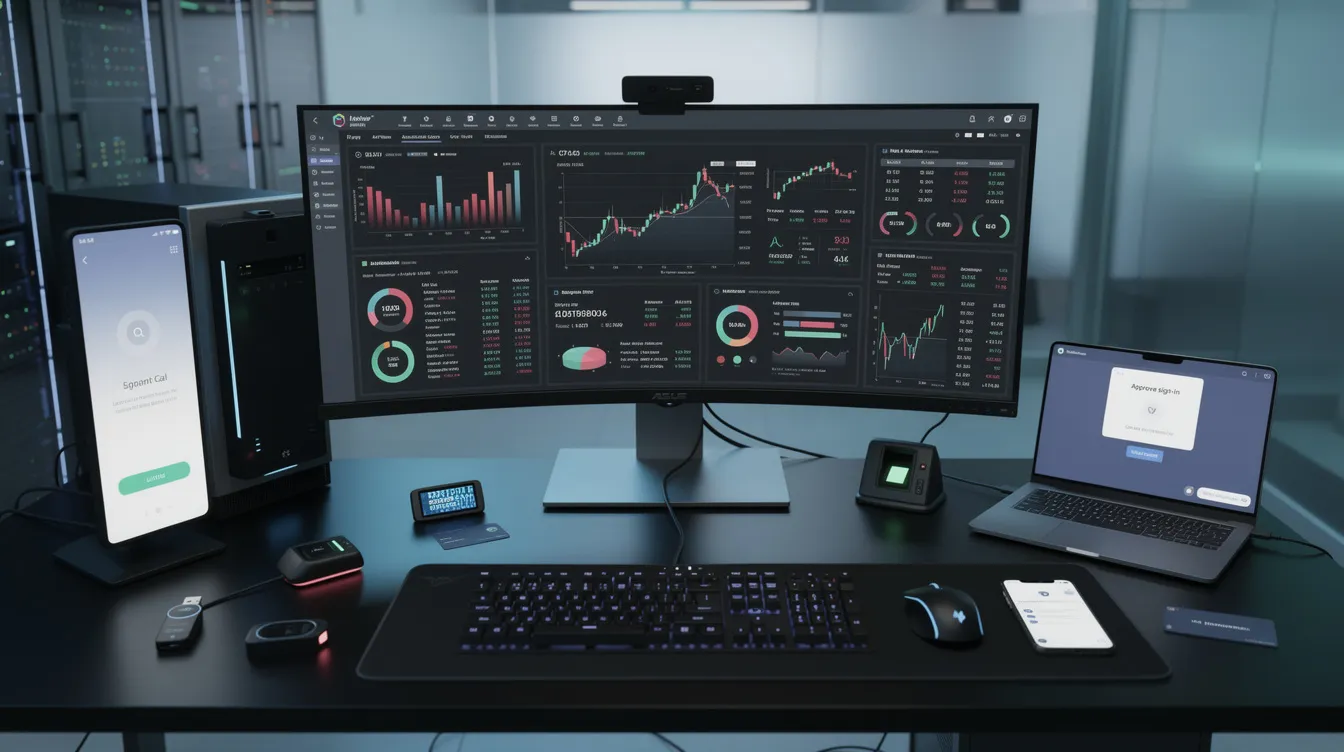
Essential components include a trading platform connected to MT4/MT5, cTrader, proprietary engines, or multi-asset venues; a client portal for onboarding and account management; CRM for brokers; payment system integrations; risk dashboards; reporting; and support tools. Enterprise-grade security should include multi-factor authentication, encryption, activity logging, GDPR-aligned data handling, and role-based access controls.
WxTrade provides a SaaS trading infrastructure that includes ready-to-deploy client portals, broker CRM, KYC/AML workflows, risk and exposure dashboards, payment gateway connections, and open APIs for external systems and liquidity providers. This model allows a newly licensed offshore forex broker to move from license approval to live operations in weeks rather than building a platform in-house.
Operational Models: Agency vs Market Maker in an Offshore Context
A forex brokerage typically operates under an agency/STP model, a market maker model, or a hybrid structure. In the agency model, the broker routes orders to liquidity providers and earns from commissions or spread markups. This model can be easier to explain to banks because the broker does not take the opposite side of all client trades.
In a market maker model, the broker internalizes flow and manages exposure internally. This can improve margin economics, but it requires strong conflict-of-interest controls, pricing governance, exposure limits, hedging rules, and client disclosure. Offshore regulators increasingly ask how a market maker monitors risk and protects client funds.
The chosen model should appear in the business plan, risk policy, execution policy, and technology configuration. WxTrade’s risk dashboards, routing configuration, CRM records, and reporting tools support governance across A-book, B-book, and hybrid execution models.
Multi-License Strategy: Growing Beyond a Single Offshore License
Many established offshore brokers no longer rely on one offshore jurisdiction. A typical path is to launch under Seychelles or BVI, add Mauritius or Labuan for regional credibility, then apply for CySEC, FCA, ASIC, or another onshore permission when the forex business has a clean track record and stronger capital.
This structure can support global clients across segmented entities while reducing regulatory conflict. For example, one entity may serve Asia or Africa, another may operate under a Mauritius Investment Dealer permission, and a later EU entity may serve eligible European clients under stricter rules.
WxTrade supports this evolution by enabling platform configuration across multiple licensed entities, client groups, payment flows, risk books, and reporting environments. A unified infrastructure helps avoid fragmented operations while respecting jurisdiction-specific regulatory requirements.
How WxTrade Supports Offshore Brokerage Launch and Scaling
WxTrade is a FinTech SaaS provider that delivers the technology backbone a forex brokerage needs after selecting a jurisdiction and licensing route. The platform ecosystem includes broker-focused CRM, client portal, risk and exposure dashboards, multi-platform trading integration, payment gateway connections, and operational reporting.
For offshore start-ups, WxTrade’s value is tied to specific capabilities: KYC/AML workflows support onboarding controls; document management supports regulatory and bank reviews; GDPR-aligned data controls support privacy governance; audit logs support internal investigations; and role-based permissions restrict staff access by function.
Customization features allow brokers to configure branding, account types, trading conditions, client groups, and reports without maintaining a full in-house engineering department. In a case-style example, a broker that obtained an offshore license in 2024–2025 could use WxTrade to configure onboarding, CRM, payments, and risk monitoring during the regulator review period, then move to live operations within several weeks after approval.
FAQs
This FAQ addresses practical questions that prospective offshore forex brokers often raise when evaluating licensing, banking, capital, and technology decisions. The answers reflect 2026 conditions and are not a substitute for advice from specialized lawyers, tax advisers, and local corporate service providers.
Is an offshore brokerage license still legal and acceptable in 2026?
Yes. Offshore forex licenses issued by recognized regulators such as FSA Seychelles, FSC Mauritius, and BVI FSC remain legal when the broker complies with local law, AML/KYC rules, and client-jurisdiction restrictions. Some banks and countries treat offshore-licensed brokers as higher risk, so transparent ownership, strong compliance records, and secure operating infrastructure are essential.
How long does it realistically take to obtain an offshore forex broker license?
A realistic timeline is usually 3–6 months from incorporation to approval in credible offshore centers, although some simpler permissions may be advertised at 2–4 weeks. Delays often arise from UBO checks, source-of-funds questions, incomplete documents, or unclear business model explanations. The waiting period can be used to configure WxTrade so operations are ready soon after approval.
What minimum budget should be planned for an offshore forex brokerage?
Although relatively low capital requirements exist in some jurisdictions, a serious launch often requires at least low six-figure USD funding once capital, legal fees, annual fees, technology, compliance, staff, liquidity, and marketing are included. A profitable business is unlikely to emerge from licensing alone; founders should plan 12–18 months of runway under conservative growth assumptions.
Will an offshore forex license limit bank and payment access?
Yes, it can. While an offshore brokerage license supports legal operations, offshore brokers often face more scrutiny from banks, EMIs, PSPs, and liquidity providers than fully onshore firms. Strong KYC/AML controls, clean UBO documentation, clear payment flows, and auditable systems such as WxTrade improve the probability of approval.
Can a broker upgrade from an offshore license to an onshore license later?
Yes. Many firms start offshore, build operating history, then apply for CySEC, FCA, ASIC, or other onshore licenses. Regulators often assess past conduct, reporting quality, governance, client complaints, capital adequacy, and technology controls, so selecting scalable infrastructure from the first license stage can support later business development.