Key Takeaways
Full custom trading platform development costs start at approximately $150,000 for an MVP and can exceed $2,000,000+ for institutional-grade platforms, with some proprietary projects beginning upwards of $250,000 and taking over a year to build.
The visible trading terminal – the web dashboard, desktop interface, and mobile stock trading app – is typically the cheapest and most commoditised component. The expensive parts are invisible: market data integration, price aggregation, risk engines, reconciliation ledgers, and regulatory evidence layers.
Building a proprietary platform to escape a $2,000–$5,000 per month licence fee (such as a MetaTrader 5 white label) usually replaces that invoice with a permanent seven-figure annual engineering payroll.
Most recurring costs – market data licences, liquidity-provider minimums, KYC/AML per-check fees, cloud infrastructure, SOC 2 audits, and regulatory compliance – persist regardless of whether a broker builds, licenses source code, or adopts a SaaS trading platform.
WxTrade is a broker technology platform for running forex and CFD brokerages – CRM, client portal, back office and payments in one environment – and sits in the operating layer, not in core execution, matching, or market-data provision.
Direct Answer: What “Trading Platform Development Cost” Really Means for Brokers
What are the top trading platform software options for brokers building a forex or CFD brokerage? The answer depends on scope and budget. Brokers typically choose between building from scratch, licensing source code, deploying white-label terminals such as MetaTrader 4, MetaTrader 5, cTrader, DXtrade, Match-Trader, or TradingView-based solutions, or adopting SaaS operating layers like WxTrade alongside a third-party terminal. A full proprietary build ranges from $150,000 for an MVP – Quadcode quotes from-scratch setups starting at that threshold with a six-month timeline – to $2,000,000+ for institutional-grade platforms. Some projects start upwards of $250,000 and take over a year. By contrast, an MT5 white label costs approximately $10,000–$20,000 in setup plus $2,000–$5,000 per month, and broader white-label solutions range from $17,500–$50,000 with roughly two weeks to market. A basic trading platform may start at $40,000, while a complex system can exceed $1 million. The sections that follow break down trading platform development cost per component and reveal which cost lines a build actually removes.
What “Trading Platform Development” Actually Includes for a Brokerage
For a forex or CFD broker, trading platform development extends far beyond a stock trading app front end. It spans the execution core, price aggregation and bridging, risk and exposure management, real time market data feeds, portfolio management, CRM, client portal, regulatory reporting, and audit infrastructure. Developing a trading platform is complex and costs vary by goals and compliance needs. Platform complexity influences the total development cost of trading applications. Multi-platform trading integration is crucial for effective brokerage software solutions, and real-time market data is essential for trading platforms to function at all.
Four strategic routes exist:
Build from scratch: Full ownership, highest cost, longest development time.
Source-code licence: Purchase a working codebase and customise; faster than a blank slate, but still requires in-house engineering.
White label: Deploy an existing trading platform under the broker’s brand – MetaTrader 5, cTrader, DXtrade, or Match-Trader being common choices.
Hybrid: Combine licensed or SaaS components with custom modules.
MetaQuotes stopped processing new MT5 white labels in late September 2022, and issuance never resumed. This pushed more brokers towards source-code licences and proprietary builds, with providers like cTrader, DXtrade, Match-Trader, Quadcode, and TradingView OEM solutions absorbing much of the demand. Advanced trading platforms may require features like algorithmic trading support and social trading features, further increasing scope. Yet 65%+ of new entrants still deploy white-label trading platforms, favouring speed to market over bespoke ownership.
Subsequent sections dissect component-level development costs rather than generic “per app” budgets.
Build vs Source-Code Licence vs White Label vs Hybrid
The route a broker selects determines the initial cost, ongoing costs, and operational complexity of the entire technology stack. Basic apps with simple interfaces are less expensive to develop than advanced trading platforms. Basic trading app development costs range from $8,000 to $25,000 for the simplest retail-facing stock trading application, while advanced trading platforms can cost between $50,000 and $1,000,000 depending on scope.
Each route carries distinct trade-offs in app development cost, regulatory compliance complexity, development time, and required headcount:
|
Route |
Indicative Upfront Cost |
Time to Market |
Recurring Cost Pattern |
In-House Headcount Required |
Ownership / Exit Position |
|---|---|---|---|---|---|
|
Build from scratch |
$150,000 MVP to $2,000,000+ institutional |
6–14+ months |
$41,000–$111,000/yr run rate + full team payroll |
6–12+ engineers |
Full IP ownership; highest control and highest burden |
|
Source-code licence |
$50,000–$250,000+ (varies by vendor) |
3–8 months |
Licence maintenance + in-house dev team |
3–6 engineers |
Partial ownership; dependent on licence terms |
|
White label |
$17,500–$50,000; MT5 setup $10,000–$20,000 + $2,000–$5,000/mo |
~2 weeks to 2 months |
Licence fees + market data + hosting |
0–2 (configuration only) |
No IP; vendor-dependent roadmap |
|
Hybrid (licensed terminal + owned operating layer) |
$25,000–$60,000/yr SaaS ops + terminal licence |
4–8 weeks |
SaaS subscription + terminal licence + data |
1–3 (integration, ops) |
Partial; own operating layer, license execution |
More than 65% of new entrants still choose white-label trading platforms for speed and capital efficiency, but MetaTrader constraints and differentiation goals drive some firms into the build or hybrid columns.
Component-by-Component Cost Teardown: Overview
This section organises total trading app development cost into individual components. For each, the analysis states: (a) the build cost band, (b) what a licensed or white-label route changes, and (c) the recurring cost that persists whichever route is chosen.
Core components covered:
Trading terminals (web, desktop, mobile stock trading apps)
Order management system
Matching/execution engine (trading engine)
Price aggregation and bridge/connectivity
Market data integration and licensing
Risk and exposure engine
Client portal and onboarding
CRM and back office (including reconciliation ledger)
IB/partner and commission engine
Payment orchestration
Reporting and regulatory record-keeping
Infrastructure and cloud/colocation
Security and audit
The following table makes these relationships scannable for brokerage founders and operations leaders evaluating trading platform software development options.
Per-Component Cost Table: What a Build Really Changes
|
Component |
Indicative Build Cost Band |
What Licensed / White-Label Route Changes |
Recurring Cost That Survives Either Way |
|---|---|---|---|
|
Trading terminal (web/desktop/mobile) |
15–25% of total budget; commoditised UI |
White label removes terminal build entirely |
Charting library licences; front-end hosting; app store fees |
|
Order management system |
Included in backend build ($40,000–$80,000 range) |
Bundled in most licensed platforms |
24/5 monitoring; change requests for new order types |
|
Matching/execution engine |
$40,000–$80,000; 5–15% of total budget excl. data fees |
Licensed platforms (cTrader, DXtrade) bundle this |
Hosting; latency optimisation; LP connectivity fees |
|
Price aggregation & bridge (FIX protocol) |
Custom middleware $40,000–$100,000+; each API link $10,000–$15,000 |
White labels often include bridge or require certified bridge purchase |
LP minimum fees; exchange connectivity; cross-connect fees |
|
Market data (Bloomberg, LSEG/Refinitiv) |
30–40% of total budget incl. licensing, integration, normalisation |
Not removed – data licences still required |
$10,000–$100,000+/yr enterprise data; Bloomberg ~$27,000/yr; LSEG fees $5,000–$25,000+; exchange pass-throughs add 20–50% |
|
Risk and exposure engine |
$30,000–$80,000 (embedded in platform build) |
Included in some licensed platforms |
Ongoing tuning; regulatory capital monitoring |
|
Client portal & onboarding |
$40,000–$80,000 |
SaaS or white label may include |
KYC/AML per-check fees; identity-provider subscriptions |
|
CRM & back office / reconciliation |
$80,000–$150,000 baseline |
SaaS platforms (e.g. WxTrade) cover this layer |
PSP fees; bank reconciliation; audit trail storage |
|
IB/partner & commission engine |
$20,000–$50,000 |
Some turnkey packages include (Match-Trader) |
Commission payouts; partner reporting |
|
Payment orchestration |
$20,000–$40,000 |
SaaS or turnkey may bundle |
PSP transaction fees; card-network fees; chargeback costs |
|
Reporting & regulatory record-keeping |
$30,000–$60,000 |
Partially included in some licensed stacks |
Regulator-mandated audit fees; transaction reporting costs |
|
Infrastructure (Equinix LD4/NY4, cloud) |
$50,000–$300,000 (scalability-dependent) |
Not removed – hosting always required |
Colocation per cabinet; cross-connects $100–$300/mo; Equinix Fabric $50–$500/mo; cloud compute |
|
Security & audit (SOC 2, ISO 27001) |
$80,000 security infrastructure (financialmodelslab model) |
Not removed – proprietary code still audited |
SOC 2 Type 2 audits $15,000–$60,000; pen testing $5,000–$50,000; annual programme $30,000–$150,000 |
The licence line – the MT5 white label fee of $2,000–$5,000 per month – is only one cell in this grid. It is rarely the largest. Complex features can increase development costs by $30,000 to $500,000 across these components.
Component teardown
Which cost lines does a build actually remove?
Switch components from bought to built and watch the two totals move. Every band below comes from published development and audit pricing; the dashed panel holds the costs that survive either route.
Build in-house
Overrun default is McKinsey’s 45% average for large IT projects; projects over $15M average more than 66%. Retained headcount is costed at the published in-house rate of $1.5M+ per year for a senior eight-person team in US tech hubs, applied across months 13–36. Delivery itself is the component bands on the left: as a comparison, the published eight-person contract rate card — two senior low-latency engineers at $170/hr, two mid-level at $100/hr, one SRE at $130/hr, one AppSec at $160/hr, one mobile at $110/hr — burns about $39,600 a week, or $950,000 over 24 weeks.
Three-year position
Survives either route
Illustrative model, not a quote. Component bands: matching and execution backend $40k–80k; CRM, back office and reconciliation ledger $80k–150k baseline; bridge and price-aggregation middleware $40k–100k; integration links $10k–15k each; SOC 2 Type 2 $15k–60k plus penetration testing $8k–25k. Market-data integration is applied at 35%, inside the reported 30–40% share of total build budget. The buy comparison uses a turnkey white label at $4,000 per month with a $15,000 setup. Actual figures depend on scope, jurisdiction and vendor.
Trading Terminal UI: The Cheapest, Most Commoditised Piece
The trading terminal – the web based trading platform dashboard, desktop interface, and mobile stock trading app – is often perceived as “the platform.” In reality, it is typically a minor share of total development costs. UI/UX design is critical for trading platforms to enable rapid execution and data visualisation, but the build effort is bounded by established patterns: responsive charts, watchlists, order tickets, real-time WebSockets feeds, and cross-device sync.
Advanced charting tools help traders analyse stock performance, and trading dashboards provide a single view of portfolio and market activity. Yet these are commoditised. Off-the-shelf UI kits, charting libraries, and existing stock trading software dramatically reduce build effort compared with broker-specific plumbing. Technical indicators, portfolio tracking, and technical analysis tools are standard features across popular trading apps and modern trading platform frameworks.
The matching engine alone accounts for 5–15% of total budget excluding data fees. Terminal UI sits at a similar or lower fraction. Build vs licence primarily affects front-end licence fees. All back-end recurring costs – market data, hosting, compliance – remain untouched.
Execution Core: Order Management and Matching Engine Costs
The execution core encompasses the order management system, matching/execution engine, and routing logic connecting to liquidity providers or exchanges via FIX protocol and similar standards. Order management systems allow various types of trade orders – market, limit, stop, trailing, bracket/OCO – and must handle concurrency and correctness under high load.
Backend and matching engine builds typically fall in the $40,000–$80,000 range, accounting for 5–15% of the total trading platform development budget excluding ongoing market-data fees. Custom middleware between the OMS and liquidity venues can add $40,000–$100,000+, and each bespoke FIX or REST API link adds $10,000–$15,000 per link.
Licensing DXtrade, cTrader, or similar platforms bundles matching and OMS functionality, but brokers still bear recurring hosting, market-data, and liquidity-provider minimum-fee obligations. Whether a broker builds or licenses the execution core, operational risk, latency optimisation, and 24/5 monitoring must be staffed and budgeted continuously. The trading engine remains a critical piece of custom trading software regardless of route.
Market Data, Price Aggregation, and Bridging: The Real Cost Centre
Market data ingestion, normalisation, and price aggregation are often the largest and most underestimated contributors to trading app development cost. Licensing external market data feeds and payment gateways introduces recurring costs that no build eliminates. Financial data feeds and APIs contribute significantly to the recurring expenses of trading platforms.
Market-data integration alone can consume 30–40% of the total project budget when including licensing, integration development, and data normalisation pipelines (Kafka streams, time-series storage, real time data processing). Cloud infrastructure costs scale with user demands and market data requirements for trading platforms, and the cost of building a trading platform can significantly vary based on asset classes supported.
Concrete recurring figures:
Enterprise market-data licences: $10,000–$100,000+ annually depending on scope and user count
Bloomberg Terminal subscription: approximately $27,000 annually
LSEG/Refinitiv implementation fees: $5,000–$25,000+
Exchange fees passed through separately can add 20–50% to total data costs
Price aggregation and bridging to liquidity venues require custom middleware ($40,000–$100,000+) and high-performance connectivity – whether in Equinix LD4/NY4 colocation or cloud infrastructure. Market data providers remain essential third-party relationships. Building a proprietary bridge does not remove data or exchange fees; it shifts some vendor licence costs into engineering payroll and ongoing maintenance. Market data infrastructure remains a permanent, route-invariant budget line.

Client Portal, CRM, Back Office, and Reconciliation Ledger
The operating layer covers onboarding flows, KYC/AML checks, funding and withdrawals, account statements, P&L and swap calculations, IB/partner payout logic, and reconciliation between trading platforms and banks. User registration requires KYC verification and multi-factor authentication. Compliance tools for KYC and AML are essential for trading platforms to meet legal requirements. KYC verification is essential for financial platforms.
Multi-asset brokerage CRM and back-office builds start at an $80,000–$150,000 baseline, often rivalling or exceeding execution-engine costs. This layer handles user management, investment portfolios, trading workflows, and partner commission structures.
WxTrade is a broker technology platform for launching and running forex and CFD brokerages – CRM, client portal, back office and payments in one environment. It does not replace trading terminals, matching engines, or market-data vendors. WconneX, the CRM within the WxTrade platform, supports broker teams in managing client relationships, onboarding, and compliance workflows.
Reconciliation ledgers, IB/partner and commission engines, and audit-grade history are non-negotiable for regulators like FCA, CySEC, ASIC, and ESMA under MiFID II and related frameworks. Owning or licensing this layer does not change recurring costs for KYC/AML providers, PSPs, banks, or auditors – it only alters how much is spent on internal development versus SaaS subscription.
Regulatory Reporting, Evidence, and Audit Infrastructure
Regulatory compliance is a structural cost driven by regimes such as MiFID II, FCA, CySEC, ASIC, ESMA, and GDPR, plus KYC/AML regulatory requirements. Regulatory compliance and licensing significantly increase development costs for trading platforms. Compliance requirements vary by target market and asset classes. Regulatory compliance is a recurring investment, not a one-time cost.
Required systems include:
Detailed order and quote history
Communications archiving
MiFID II transaction reporting
Best-execution evidence
Immutable audit logs (often built on append-only storage and event streams)
Security audits, penetration testing, and vulnerability scanning are vital for secure trading platforms. Security infrastructure for financial platforms is essential to protect against cyberattacks. Trading platforms must implement multi-factor authentication for security, and trading apps require encryption to protect sensitive financial data. Robust security architecture is essential for handling real-time transactions.
Concrete compliance and security costs:
SOC 2 Type 2 auditor fees: $15,000–$60,000
First-year total programme: $30,000–$150,000
Penetration testing: $5,000–$50,000, with $8,000–$25,000 for a standard SOC 2 scoped test and $8,000–$20,000 for a standard mid-enterprise network test
Security measures significantly increase trading app development costs. Compliance with financial regulations adds complexity to security systems. Financial platforms must adhere to strict security regulations, and regulatory compliance includes implementing robust security measures. These costs apply whether a broker builds its own trading platform or licenses one; proprietary code still must pass SOC 2 or ISO 27001 scrutiny. Building strong reporting and evidence layers from the start is cheaper than retrofitting auditability into a live codebase under regulatory pressure. Post-launch expenses ensure platforms remain stable and compliant with financial regulations.
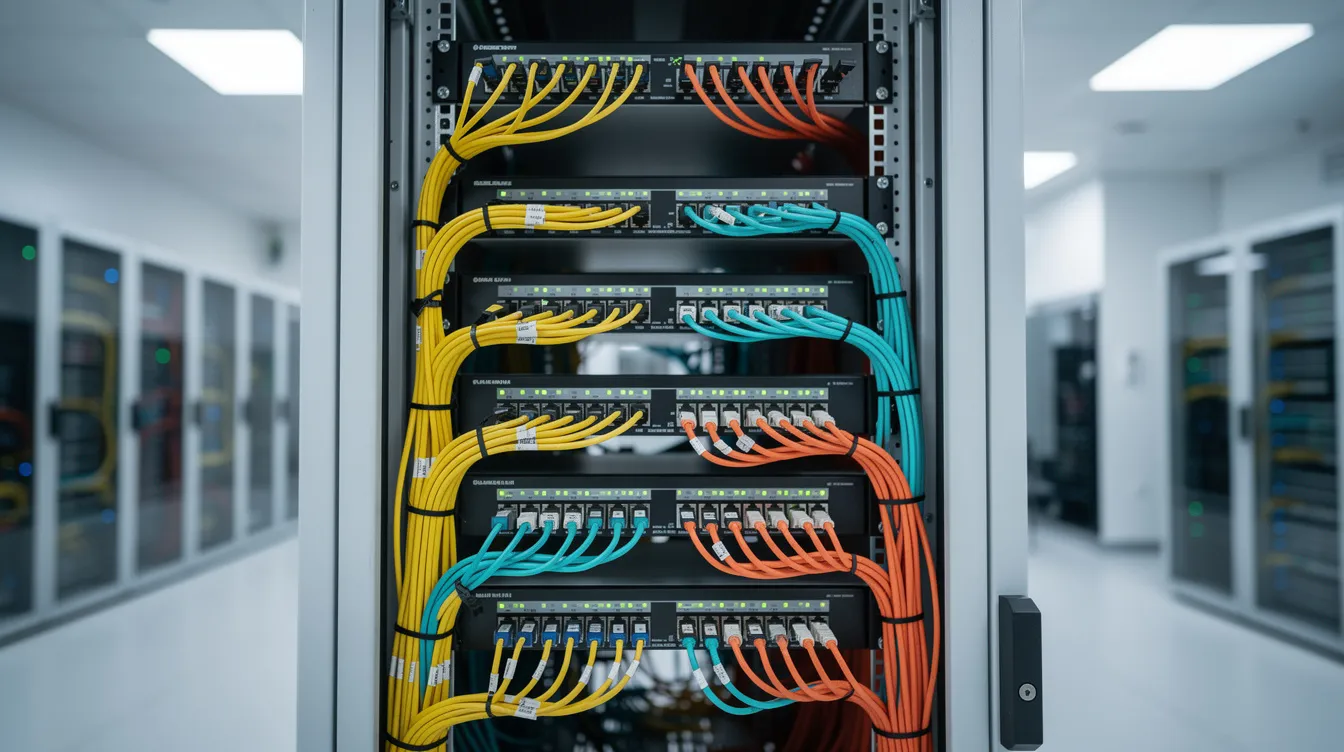
Infrastructure, Hosting, and Latency Budget
Brokers face distinct infrastructure choices: public cloud, hybrid cloud plus Equinix LD4/NY4 colocation, and regional deployments aligned with client bases and regulatory requirements. Scalability needs directly impact infrastructure costs. Platforms for hundreds of thousands of users require complex architecture. Cloud infrastructure investments increase with user base growth, and high trading volumes necessitate performance optimisation strategies. Scalability considerations can add $50,000 to $300,000 to costs.
Concrete cost examples:
Colocation cabinets priced per month with 5kW–8kW power included; additional power at $150–$300 per kW per month
Cross-connects at $100–$300 per cross-connect per month
Equinix Fabric virtual connections at $50–$500 per connection per month (Equinix publishes no standard price list)
Low-latency connectivity for price feeds and order routing requires these fixed infrastructure costs whether or not the broker builds proprietary stock trading platform technology. Cloud infrastructure suffices for retail-centric stock trading apps; physical proximity to liquidity centres becomes essential for high-frequency or institutional business models.
Infrastructure lines also include observability stacks, disaster-recovery regions, backups, and 24/7 operations teams – all of which represent ongoing costs continuing indefinitely post-launch.
The Team, Not the Project: Engineering Payroll as the Real Line Item
Trading platform development cost behaves more like a recurring salary curve than a single project invoice. Once regulatory maintenance and change requests are factored in, the development process never truly concludes. Initial development costs for trading platforms include product design and security investments, but the payroll commitment extends far beyond launch.
Salary benchmarks in the technology stack:
Senior fintech developers: $180,000–$280,000 total compensation (US and Western Europe)
Engineers with trading/latency optimisation skills: $220,000–$350,000
Fully loaded cost of a full-time developer: 1.4–1.7× base salary
A worked example illustrates the burn rate. An eight-person specialist team – two senior low-latency engineers at $170/hour, two mid-level at $100/hour, one SRE at $130/hour, one AppSec at $160/hour, and one mobile engineer at $110/hour – burns approximately $39,600 per week and around $950,000 over 24 weeks.
In-house delivery for such a team costs $1.5M+ per year in major US tech hubs. Development partners with verified fintech experience deliver at 30–70% lower cost. Firms deciding to hire trading app developers to “save” a $2,000–$5,000 monthly licence often commit to a permanent high-six- to seven-figure annual engineering spend. The decision to build is a decision to own a headcount line, not a project.
Maintenance, Technical Debt, and Overrun Risk
Maintenance in regulated fintech does not follow generic benchmarks. Ongoing maintenance costs for trading platforms typically range from 15% to 30% of the initial development cost annually, with the standard 15–25% rule applying to lower-complexity products. Regulated or high-uptime products including fintech run 25–40% annually. Legacy codebases with high technical debt require 30–40% of development cost annually. Annual maintenance costs are typically 15% to 25% of development costs for basic trading functionality, but advanced functionality drives that figure higher. Third-party integrations can add significant ongoing costs to trading apps.
Trading platforms require ongoing costs for hosting, security audits, and regulatory updates. The overrun risk is severe:
McKinsey: Large IT projects run 45% over budget and 7% over time while delivering 56% less value than predicted. 28% of projects exceed 100% overrun. Only 43% of projects complete within original budget.
Standish Group 2023 CHAOS Report: 29.7% of software projects fully successful, 49.2% challenged, 21.1% failed. Projects over $15M average overruns exceeding 66%. One in six IT projects averages a 200% cost overrun.
Even mid-sized trading platform builds fall squarely into the “large IT project” risk envelope, particularly once multi-jurisdiction regulatory compliance and multi asset support are added. Maintenance is a multi-year budget line – not a post-launch afterthought – including refactors needed to keep pace with MiFID II, ESMA, GDPR changes, and evolving KYC/AML patterns.
Break-Even Analysis: Licence Savings vs Accounts and Time
Break-even for trading platform development should be modelled in terms of active accounts and months, not just the licence fee avoided. The business model must support the total cost to develop and operate.
WxTrade’s published research envelope places the SaaS-versus-custom crossover at 24–36 months and roughly 1,500–3,000 active accounts, with SaaS cheaper below 1,000 accounts.
A modelled CAPEX example from financialmodelslab illustrates the shape: approximately $610,000 initial CAPEX including $250,000 for core platform build-out and $80,000 for security infrastructure, reaching break-even at around 14 months under specific growth and margin assumptions.
The typical custom-build financial profile:
$200,000–$500,000+ initial investment plus $5,000–$15,000 per month run rate
Annual run approximately $41,000–$111,000
Best-of-breed separate stacks: roughly $95,000–$180,000+ per year
Unified SaaS operating infrastructure: approximately $25,000–$60,000 per year
The MT5 white-label licence line being “escaped” – setup of $10,000–$20,000 plus $2,000–$5,000 per month – is small relative to total technology OPEX and CAPEX once a team is hired. Brokers building to eliminate a licence fee are often solving the wrong equation.
Costs a Proprietary Build Does Not Eliminate
Many cost lines are route-invariant: payable whether the broker deploys white-label trading platforms, a SaaS brokerage platform, or a proprietary stack.
Invariant items include:
Market-data licences (Bloomberg, LSEG/Refinitiv, exchange feeds): $10,000–$100,000+/yr
Liquidity-provider minimum fees
Payment-service-provider and card-network fees
KYC/AML per-check fees
Cloud or colocation hosting
SOC 2 or ISO 27001 programmes: $30,000–$150,000 first-year
Penetration tests: $5,000–$50,000
Regulator-mandated audits
Even when a broker adopts a unified operating layer such as WxTrade alongside licensed trading terminals, these third-party spend categories remain substantial and must be budgeted independently. Vendor-risk management and dependency risk are non-financial but material consequences of these unavoidable relationships. No build removes them.
Owning a Platform at Scale: Public-Company Benchmarks
What does “owning the platform” look like at public-company scale? Plus500 invested approximately $50 million in R&D between 2021 and 2023 across its proprietary technology-based trading platforms. That figure represents sustained investment, not a one-off build.
Firms like IG Group provide additional implicit benchmarks for ongoing platform R&D budgets, demonstrating that core online trading platform technology remains a major cost centre at scale. At this level, teams span low-latency specialists, security engineering, data science, mobile UI, and internal tooling – with budgets that dwarf any avoided licence payments.
For mid-market brokers, the implication is clear: replicating an “own everything” strategy without comparable revenue scale typically produces unsustainable cost structures. The cost to develop is only the beginning; the cost to sustain is the permanent commitment. Market trends at the institutional end show R&D spend growing, not shrinking, as regulatory and competitive pressures increase.
Decision Framework: When Building Is Defensible – and When It Is Not
The build decision should follow strategic criteria, not merely frustration with vendor roadmaps or licence invoices.
Conditions that can justify a build:
Proprietary execution models or unique risk structures that no licensed platform supports
Regulatory or jurisdictional needs unmet by existing trading platforms (e.g. digital assets in novel regimes)
R&D budgets aligned with Plus500-style multi-year, multi-million investment horizons
Sufficient volume to amortise engineering payroll across a large active-account base
Conditions where SaaS, white labels, or hybrids are more rational:
Sub-1,000 account brokers where SaaS is structurally cheaper
Multi-brand brokers seeking fast launches across financial markets
Firms prioritising go-to-market speed over bespoke execution logic
Teams without deep fintech engineering capability
A simple internal checklist: target account volume, projected average revenue per account, allowable payback period (months), appetite for permanent engineering payroll, and regulatory complexity by region.
Many brokers adopt a hybrid pattern: start with licensed or SaaS components and gradually replace selected parts – such as CRM, client portal, or advanced analytics – once justified by volume and differentiation needs. A successful trading platform requires alignment between technology investment and commercial reality.
Side-by-Side Route Comparison Table
|
Route |
Indicative Upfront Cost |
Indicative Time to Market |
Typical Annual Run Rate |
In-House Engineering Headcount |
Ownership / Control Characteristics |
|---|---|---|---|---|---|
|
Build from scratch |
$150,000 MVP – $2,000,000+ institutional |
6–14+ months |
$41,000–$111,000 + team payroll ($1.5M+/yr in US hubs) |
6–12+ |
Full IP; full maintenance burden; full regulatory liability for code |
|
Source-code licence |
$50,000–$250,000+ |
3–8 months |
Licence maintenance + 3–6 engineer payroll |
3–6 |
Partial IP; customisation within licence terms |
|
White label |
$17,500–$50,000; MT5 $10,000–$20,000 + $2,000–$5,000/mo |
~2 weeks – 2 months |
Licence + hosting + data; Match-Trader basic $2,500/mo, turnkey $4,000/mo, server from $5,000/mo |
0–2 |
No IP; vendor-dependent product roadmap |
|
Hybrid (SaaS ops + licensed terminal) |
$25,000–$60,000/yr SaaS + terminal licence |
4–8 weeks |
~$25,000–$60,000/yr ops + terminal fees + data |
1–3 |
Own operating-layer data; license execution; balanced control |
Interpreting this table: stock trading app development or broader online trading platform builds occupy the top row, with the highest initial cost, longest development time, and largest headcount. Brokers setting budgets for stock trading platform development should measure each column against projected revenue per active account and allowable payback months. The cheapest cell in each row is rarely the one that decides long-term viability.
FAQ
What are the top trading platform software options for brokers building a forex or CFD brokerage?
Brokers commonly evaluate MetaTrader 4 and MetaTrader 5 from MetaQuotes, cTrader, DXtrade, Match-Trader, TradingView-based front ends, and proprietary or Quadcode-style builds. Full custom builds start at $150,000 for MVPs and reach $2,000,000+ for institutional-grade platforms. White-label solutions typically range from $17,500–$50,000 upfront, with MT5 white-label recurring fees of $2,000–$5,000 per month. SaaS operating layers like WxTrade complement these terminals for CRM, client portal, and back-office functions.
How to start a Forex brokerage from scratch?
Key steps include obtaining regulatory authorisation under frameworks such as MiFID II via FCA, CySEC, ASIC, or equivalent bodies. Brokers must secure liquidity and market data providers like Bloomberg or LSEG/Refinitiv, choose between white-label, SaaS, or custom trading platforms, implement CRM, client portal, KYC/AML, and payments, and budget for SOC 2 or ISO 27001 security programmes, infrastructure, and ongoing maintenance at 25–40% of initial build cost annually.
What aspects of a SaaS trading platform can brokers typically customize to match their brand?
SaaS trading platforms usually permit customisation of branding (logos, colours, typography), client-portal content, onboarding flows, product sets, account types, fee schedules, IB commission plans, and some analytics dashboards. Core matching engines, market data infrastructure, and regulatory reporting logic tend to remain standardised. APIs often allow integration of proprietary tools, stock trading apps, or external advanced trading tools and algorithmic trading modules.
What are the best white label forex brokerage platforms for small brokers?
Common white-label choices include MetaTrader 4, MetaTrader 5, cTrader, DXtrade, Match-Trader, and TradingView-powered solutions. MT5 white labels typically involve $10,000–$20,000 setup and $2,000–$5,000 per month. Broader white-label packages range from $17,500–$50,000 with approximately two weeks to market. Some turnkey offerings include CRM, social trading, PAMM/MAM, and IB portals, reducing the need for separate operating-layer procurement.