- Category: Brokerage Business
Prime of Prime Liquidity: A Beginner’s Guide for Brokers
Prime of Prime Liquidity: A Beginner’s Guide for Brokers
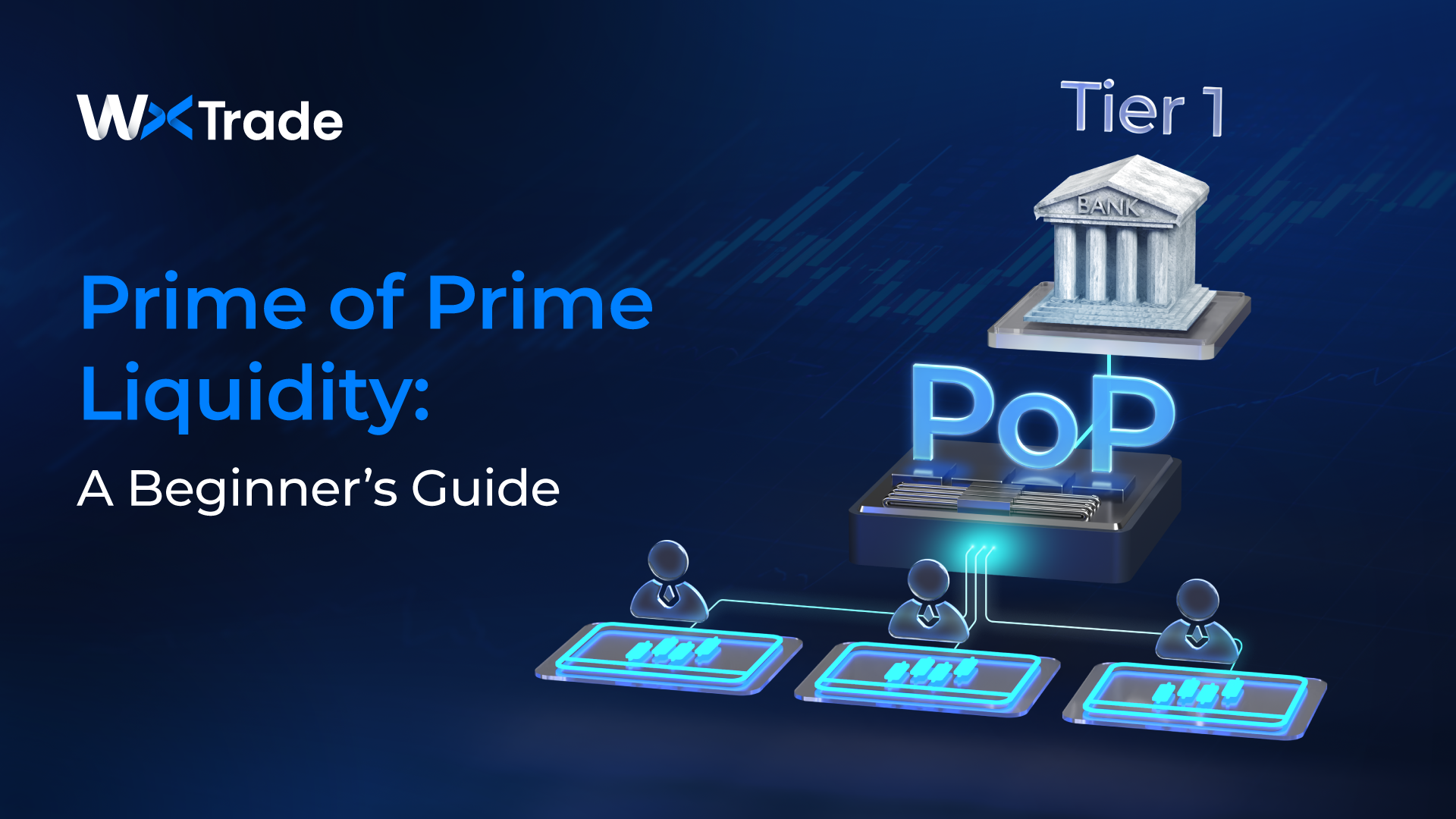
Prime of prime (PoP) liquidity is a key concept in brokerage services, acting as an intermediary between smaller brokerage firms and deep liquidity pools maintained by large financial institutions. In the world of FX/CFD trading, prime of prime services play a crucial role in connecting brokers to global liquidity. It enables brokers to access global markets without needing the extensive capital or direct bank relationships required by large institutions. Traditionally, prime brokerage companies served large institutional clients with a suite of prime brokerage services, including trading, clearing, and financing. Prime of Prime services emerged in the early 2000s as an evolution of traditional prime brokerage models.
At its core, prime of prime liquidity lets newer and mid-sized brokers connect to institutional FX and CFD markets through a specialist intermediary company that aggregates tier-1 bank relationships and exposes them in a broker-friendly way. These PoP firms source liquidity from multiple venues, providing institutional-grade pricing and execution. The increasing demand for institutional-grade liquidity among smaller firms and clients—especially after major market events and regulatory changes—has driven the expansion of PoP services across asset classes. For example, a broker partners with a PoP firm, which in turn connects to several liquidity providers, allowing the broker to offer competitive pricing and deep liquidity to its clients. Historically, ‘true prime’ services were only accessible to large institutions, but PoP brokers now make similar services available to smaller brokers and professional traders.
In this guide, we’ll explain what prime of prime liquidity is, where it fits in your brokerage stack, who benefits from it, how connectivity works, pricing structures, and common pitfalls to avoid when selecting a PoP provider. PoP services enable both retail clients and firms engaged in institutional trading to access deep liquidity and advanced trading infrastructure.
This content is for information purposes only and does not constitute financial advice.
Prime of Prime Liquidity Explained
The institutional FX and CFD market is often likened to a private club, with direct access limited to large banks, hedge funds, and top-tier brokers with substantial capital and credit. A prime broker is usually a large bank that sponsors these clients, extending its balance sheet and relationships to facilitate trading. Prime brokers also extend credit relationships to institutional clients, enabling margin trading and access to liquidity providers without requiring each client to establish individual credit arrangements.
Most retail and mid-tier brokers cannot meet these capital requirements. A prime of prime broker sits one step below, holding direct relationships with tier-1 banks, ECNs, market makers, and non bank providers, and repackaging that access for smaller brokers. These firms operate within the broader market infrastructure to facilitate trading by connecting smaller brokers to deep liquidity sources and efficient execution. The liquidity sources aggregated by PoP brokers include both institutional liquidity from tier-1 banks and non bank providers, ensuring access to deep and diverse liquidity pools. The PoP acts as a “mini-prime broker,” providing institutional pricing, execution, credit risk management, and technology optimized for smaller ticket sizes and high volumes. Prime of Prime services allow retail brokers to access liquidity pools and competitive pricing.
The flow of orders typically looks like this:
Trader → Brokerage → Prime of Prime → Tier-1 Banks and Venues
Prime of prime brokers are involved in both buying and selling transactions, continuously quoting buying and selling prices to maintain liquidity and facilitate trading. They profit from the bid-ask spreads and trading activity generated by their clients. Thus, a prime of prime is both a credit intermediary and a liquidity aggregator, playing a vital role in market efficiency and stability, especially during volatile periods. Prime providers bridge the gap between large banks and smaller brokers, offering multi asset liquidity across forex, commodities, indices, and more. PoP services have evolved from traditional prime brokerage models and now cover multiple asset classes, including stocks, cryptocurrencies, and derivatives.
Liquidity Fundamentals: Spread, Depth, and Slippage
Understanding liquidity quality requires knowing three key concepts:
- Spread: The difference between bid and ask prices. Tight spreads are attractive but must be reliably tradeable.
- Depth of Market: The volume available at each price level. A market may look tight at the top but be thin at larger sizes.
- Slippage: The difference between the expected price and the actual execution price. Can be positive or negative. Fast execution is essential for minimizing slippage and ensuring that trades are filled at expected prices, especially during periods of high market activity.
A strong PoP relationship balances reasonable spreads, consistent depth, and a slippage profile with both positive and negative outcomes, not just one-sided negative slippage.
Types of Financial Institutions
Financial institutions are the backbone of the financial services industry, providing a wide array of services that enable individuals, companies, and governments to participate in global financial markets. These organizations play an important role in facilitating trading, managing risk, and providing liquidity—ensuring that buy and sell orders can be executed efficiently and at competitive prices.
Among the most prominent financial institutions are commercial banks and investment banks. Commercial banks offer traditional banking services, while investment banks—such as Goldman Sachs—specialize in underwriting, advisory, and trading services for clients ranging from corporations to governments. These large financial institutions often act as prime brokers, extending credit lines, custody, and settlement services to hedge funds and other institutional clients, enabling them to execute trades and manage complex portfolios.
Hedge funds are another key player, pooling funds from high-net-worth individuals and institutions to invest in a broad range of assets. They frequently employ proprietary trading strategies and rely on prime brokers for access to liquidity and trading services. Proprietary trading firms, on the other hand, use their own capital to trade directly in financial markets, often leveraging algorithmic trading to execute high volumes of transactions at lightning speed.
Market makers are specialized financial institutions that continuously quote buy and sell prices for securities, providing liquidity and helping to reduce transaction costs for all market participants. By facilitating trading and maintaining liquid markets, market makers play a critical role in ensuring price stability and efficient price discovery.
Brokerage firms, including broker dealers, act as intermediaries between buyers and sellers, executing trades on behalf of clients and providing access to a broader range of financial markets. With the rise of online trading platforms, individuals and smaller brokers can now gain access to global markets and liquidity providers that were once the exclusive domain of large institutions, choosing between white label and full-stack brokerage models depending on their strategy and resources. Prime of Prime brokers often provide other trading services, such as advanced trading infrastructure and risk management tools, enabling smaller brokers to compete with larger institutions.
Liquidity providers—including market makers and proprietary trading firms—are essential for maintaining liquid markets, especially in areas like prediction markets and futures contracts. Their ability to provide tailored solutions and access to multiple sources of liquidity gives brokers a competitive edge, allowing them to offer better pricing and a broader range of trading services to their clients.
For smaller brokers, partnering with prime brokers or leveraging prime of prime (PoP) models is often the most effective way to gain access to institutional-grade liquidity and trading infrastructure. Many brokers leverage the PoP structure to access competitive pricing and better trading conditions. This enables them to compete with larger financial institutions, reduce transaction costs, and manage market impact more effectively.
Regulatory bodies, such as the exchange commission, oversee the operations of financial institutions to ensure fair and transparent market participation. Compliance with regulations related to capital requirements, risk management, and consumer protection is essential for all firms operating in the financial services industry.
In summary, the diverse ecosystem of financial institutions—including banks, hedge funds, proprietary trading firms, market makers, and brokerage firms—collectively supports the efficient functioning of financial markets. Their ability to facilitate trading, provide liquidity, and offer tailored solutions is critical for brokers seeking to execute trades, manage risk, and deliver value to their clients in an increasingly competitive landscape, including reactivating dormant traders and underused client segments as part of a holistic growth strategy.
Positioning Prime of Prime in Your Brokerage Stack
Clients simply place buy or sell orders and receive confirmations. Behind this seamless experience is a chain of systems that affect execution quality.
A typical order journey:
- Trader sends order via platform (mobile, web, desktop).
- Trading server applies risk and routing logic, deciding whether to internalize or externalize risk.
- For externalized orders (A-Book), the order passes through a liquidity bridge or gateway connecting to the PoP via FIX or API.
- The PoP validates and routes the order to the best venue in its liquidity pool.
- Execution reports flow back through the chain to the client.
Latency and configuration issues at any step can cause rejections, poor slippage, or inconsistent fills. Hosting trading servers and PoP infrastructure near major data centers reduces latency and improves execution quality.
Dealing Models: A-Book, B-Book, and Hybrid
- A-Book: Client risk is mostly externalized; orders are hedged one-for-one with the PoP.
- B-Book: Broker internalizes risk, acting as market maker; PoP may still be used to hedge or route specific flow.
- Hybrid: Mix of internalization and externalization, dynamically routed based on client behavior or risk.
A good PoP connection offers flexibility to switch between these models without overhauling your liquidity stack.
Who Should Use Prime of Prime?
PoP liquidity is accessible not only to established brokers but also to startups and scaling firms, and understanding how to start a CFD forex brokerage helps founders design their PoP relationships and overall infrastructure from day one.
- New brokers can launch with credible, bank-grade pricing without negotiating with multiple banks, using a single institutional-grade access point.
- Scaling brokers can expand into additional asset classes (metals, indices, energies, cryptocurrencies) via the same PoP.
- Large brokers may supplement PoP with direct prime broker relationships but often maintain PoP for certain products or regions.
Both traders and investors benefit from improved liquidity and execution through PoP solutions. Large transactions by investors, such as institutional investors or high-net-worth individuals, can have a significant impact on market prices, making the role of liquidity providers crucial for market stability.
PoP providers typically assess your license, regulatory status, business model, volume estimates, and platform setup during onboarding, so choosing the right broker license as a strategic asset is foundational. Brokers must comply with strict licensing, financial stability, and client protection regulations, including AML and KYC protocols. Regulatory oversight comes from authorities like the FCA (UK), CFTC (US), ASIC (Australia), and ESMA (EU). Brokers must also follow local guidelines, including the suitability rule for investment recommendations. Additionally, brokers must adhere to local regulatory guidelines, which may impose restrictions on leverage limits, trade reporting, and marketing practices, making brokerage licensing and permissions across jurisdictions a core strategic decision. Negative balance protection is also an important risk management measure required by many regulators to safeguard traders from excessive losses.
While the PoP model offers many advantages, it also presents challenges such as regulatory compliance, which can be particularly difficult for smaller brokers lacking the resources to navigate complex regulations.
Importance of Liquidity Providers and Liquidity Pools
Liquidity pools aggregate buy and sell orders from market participants, including hedge funds, investment banks, proprietary trading firms, and market makers. These pools ensure sufficient liquidity to facilitate trading, reduce transaction costs, and support market efficiency.
Access to deep liquidity pools is critical for executing large trades at competitive prices and managing risk. Robust liquidity supports advanced trading strategies like algorithmic trading and participation in prediction markets.
Liquidity pools also enable efficient trading of futures contracts and derivatives, which help manage risk and maintain price stability.
For brokers, accessing high-quality liquidity pools through a PoP means offering clients better pricing, faster execution, and a broader range of trading services, providing a competitive edge.
Regulatory Environment
Regulations ensure market integrity and investor protection. In the US, the SEC oversees brokers, prime brokers, and market makers, enforcing rules like the Dodd-Frank Act for risk management and transparency.
In the EU, ESMA regulates financial institutions, requiring transparency, capital adequacy, and conflict-of-interest disclosures. Other regulators include FINRA and CFTC, monitoring broker dealers and liquidity providers.
Partnering with regulated PoP providers ensures compliance, market stability, and ethical conduct, building client trust.
Connectivity: Bridges, Aggregation, and Routing
Connectivity quality is as important as liquidity itself.
- Liquidity bridges map your symbols to PoP’s, translate order formats to FIX or APIs, apply markups, enforce routing, and reconcile executions.
- PoPs provide APIs and FIX sessions; thorough testing ensures symbol mapping, pricing, and order handling meet expectations.
When using multiple PoPs or liquidity providers, an aggregator consolidates price streams and routes orders based on best price, size, ticket constraints, rejection history, and analytics.
Physical hosting near major financial data centers reduces latency, improving quote freshness and execution quality.
Market Access and Reach
The Prime of Prime (PoP) model has revolutionized market access for retail brokers and institutional clients, serving as a crucial bridge to the world’s most liquid financial markets. By connecting retail brokers directly with top-tier liquidity providers and deep liquidity pools, PoP brokers empower even smaller firms to compete on a level playing field with large financial institutions. This direct access to institutional grade liquidity ensures that brokers can deliver efficient trade execution, competitive pricing, and a broader range of trading services to their clients.
For retail forex brokers and CFD brokers, the PoP model is a game-changer. It enables them to gain access to a wide array of trading instruments—including foreign exchange, indices, commodities, and other financial instruments—without the need for extensive capital or direct relationships with major banks. This access to multi asset trading and deep liquidity pools allows brokers to offer their clients a more diverse and attractive trading experience, supporting both retail traders and professional traders seeking advanced trading opportunities.
Institutional traders, such as hedge funds, asset managers, and proprietary trading firms, also benefit significantly from the PoP model. By leveraging PoP providers, these institutional clients can manage risk more effectively, execute large orders with minimal market impact, and access a broader range of asset classes. The PoP model’s robust risk management services—including real-time position monitoring and margin call management—help mitigate operational risks and ensure financial stability, even during periods of high market volatility.
Advanced trading platforms and technology are at the heart of the PoP model’s success. By integrating with state-of-the-art trading infrastructure, brokers can offer low latency execution, fast order routing, and seamless access to global markets. This technological edge is essential for delivering high quality liquidity and supporting the needs of both retail and institutional market participants.
Transparency is another hallmark of the PoP model. Brokers benefit from clear, transparent pricing and regular trade execution reports, which foster trust and confidence among clients. The ability to customize trading solutions—tailoring liquidity aggregation, trading instruments, and reporting to specific client needs—gives brokers a competitive edge in the crowded financial services industry.
Ultimately, the Prime of Prime model has become an indispensable component of the modern brokerage stack. By providing direct market access, deep liquidity, and institutional-grade trading services, PoP brokers enable retail brokers, institutional traders, and proprietary trading firms to manage risk, expand their market reach, and compete effectively in the global financial markets. As demand for high quality liquidity and efficient trade execution continues to rise, the PoP model will remain a cornerstone of market access and reach for brokers of all sizes.
Pricing Prime of Prime Liquidity
PoP pricing typically involves:
- Spread-based pricing: Raw or semi-raw spreads plus broker markup; clients pay via spread.
- Commission per million: Fixed dollar amount per million units traded, allowing sharp spreads with explicit commissions.
- Minimum monthly fees (MMFs): Baseline fees regardless of volume.
- Additional fees may include market data charges, redistribution fees, ticket fees, and connectivity or hosting costs.
Liquidity providers earn by continuously quoting buy and sell prices, profiting from the spread and reducing transaction costs, while brokers must ensure that switching payment service providers in a CFD brokerage does not disrupt funding flows and trading activity.
High-frequency trading firms use algorithms to provide liquidity and facilitate price discovery, enhancing pricing efficiency.
Comparing providers requires modeling total costs at different volume levels to find the best fit.
Common Pitfalls and How to Avoid Them
- Quasi-PoPs: Providers reselling another PoP’s feed can add latency, cost, and counterparty risk.
- Single-venue reliance: Dependence on one PoP or venue risks outages and liquidity shocks.
- Last look misalignment: Poorly aligned last look practices cause high rejections or one-sided slippage.
- Ignoring flow quality: Toxic trading behaviors strain relationships and worsen pricing.
Due diligence, transparent pricing, execution monitoring, and diversified liquidity sources help mitigate these risks.
Conclusion
Prime of prime liquidity offers brokers a practical way to access institutional markets without the capital and complexity of direct tier-1 relationships. Success depends on solid architecture, reliable connectivity, transparent pricing, and vigilant execution quality monitoring.
Used well, PoP liquidity improves execution, risk management, and scalability—key for competitive brokerage operations.
FAQ
How is Prime of Prime liquidity priced?
Pricing often includes a combination of spreads, commissions, and minimum monthly fees. Brokers may pay via spread markups or fixed commissions per million traded, with additional fees for market data, connectivity, or hosting. Understanding all cost components helps brokers compare providers effectively.
Who benefits most from Prime of Prime services?
New and scaling brokerage firms benefit significantly from PoP services. Start-ups can launch with credible, bank-grade pricing without negotiating with multiple banks, while growing brokers can expand into additional asset classes and venues using the same PoP relationships.
How does a Prime of Prime broker differ from a prime broker?
A prime broker is typically a large investment bank that offers direct trading, clearing, and financing services to large institutional clients like hedge funds. Prime of Prime brokers act as intermediaries between these prime brokers and smaller brokers, providing access to liquidity and trading infrastructure that smaller firms cannot obtain directly.
What is Prime of Prime (PoP) liquidity?
Prime of Prime liquidity is a service that allows smaller brokerage firms to access deep liquidity pools maintained by large financial institutions, such as tier-1 banks and market makers, without needing direct relationships or large capital requirements. PoP providers aggregate liquidity from multiple sources and offer institutional-grade pricing and execution to brokers.