- Category: Brokerage Business
What Is Liquidity Aggregation?
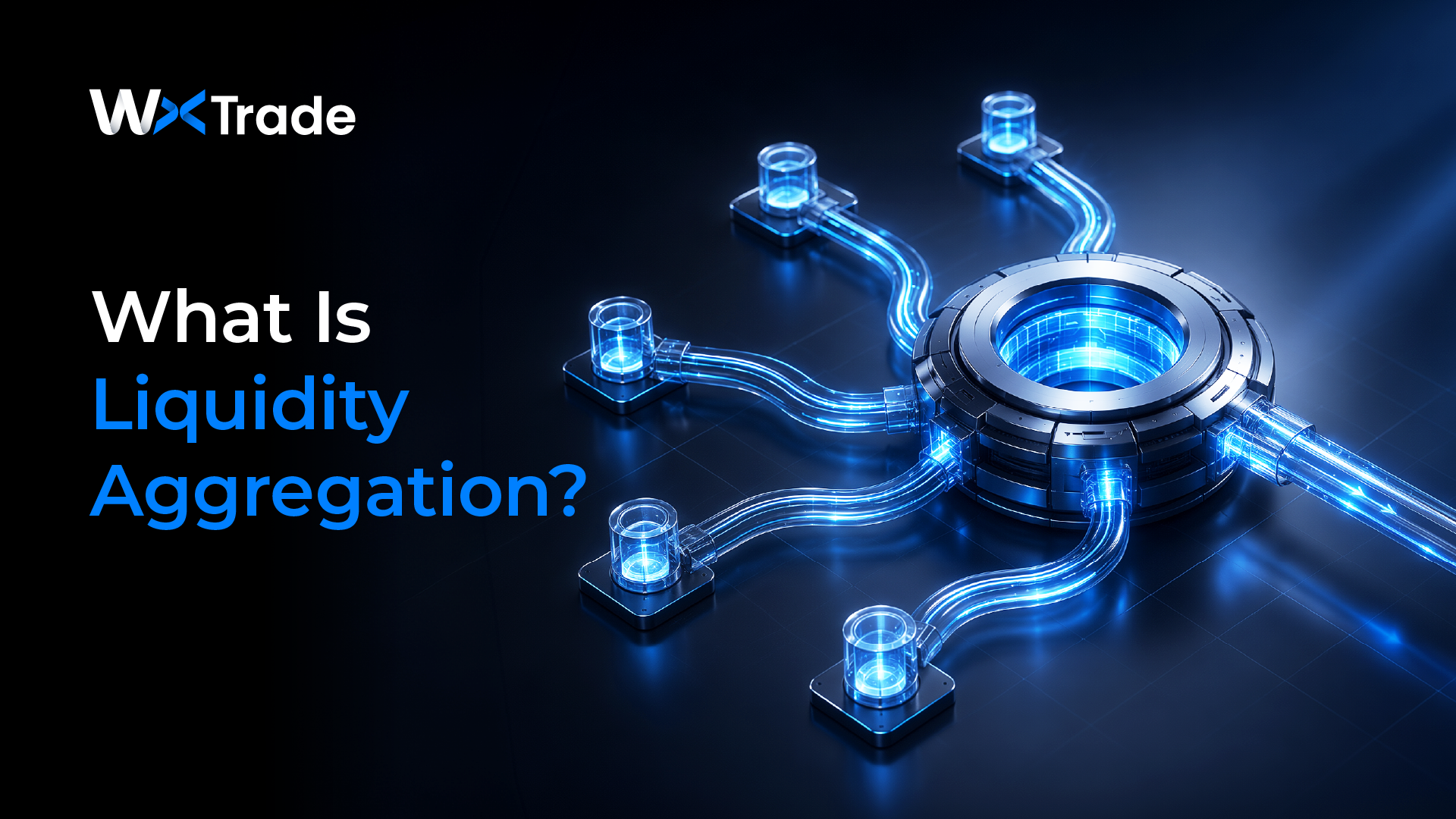
Liquidity aggregation is a foundational technology within a modern brokerage platform—a comprehensive trading infrastructure that integrates liquidity aggregation, API connections, and technology infrastructure to enable fast, reliable trade execution. This process involves combining quotes and order books from multiple liquidity providers—including Tier-1 banks, prime-of-prime providers, crypto exchanges, and market makers—into a unified depth-of-market that brokers can use to execute trades with optimal pricing and execution quality.
Since MiFID II implementation in 2018 and the rise of crypto exchanges from 2017–2021, aggregating liquidity has become essential across FX, CFDs, and cryptocurrency markets. The following sections cover how liquidity aggregation works, order flow showing within aggregated environments, and infographic recommendations for visualising these systems.
Key topics covered:
- Core definitions and technical architecture
- Benefits for pricing, market depth, and trade execution
- Flow analytics and dashboard design
- Implementation roadmap for brokerage infrastructure
What Is Liquidity Aggregation?
In the financial market, liquidity refers to the ability to buy or sell instruments like EURUSD, BTCUSD, XAUUSD, or US100 at prices close to the current market rate, even for larger tickets of 50–200 lots. A liquidity aggregator technology routes orders by pulling real-time quotes and market depth from different liquidity providers into a single, consolidated order book within the broker’s trading infrastructure. Aggregators optimize prices and execution quality by adapting to varying market conditions, ensuring better trade fills across different scenarios.
Two distinct approaches exist:
- Price aggregation: Selects best bid/ask only (top-of-book visibility)
- Depth aggregation: Merges full multi-level order books for partial fills and larger tickets
A brokerage in 2026 can simultaneously aggregate liquidity from multiple liquidity sources: a Prime-of-Prime (PoP) FX provider in London via FIX 4.4, a crypto exchange in Singapore via WebSocket, and a market maker in New York via REST API. The aggregation layer and trading front-ends are provided via SaaS, while brokers choose and connect their own LPs through bilateral contracts. By combining liquidity from multiple sources, the trading process becomes more efficient and stable, enhancing operational independence within financial trading systems.
Why Liquidity Aggregation Matters for Modern Brokerages
Liquidity aggregation systems directly impact core brokerage KPIs: spread competitiveness, rejection rate, slippage, fill ratio, trading conditions, and client retention. Without sufficient liquidity from multiple providers, brokers face significant operational risks during high market volatility events.
Core benefits:
- Tighter spreads: 0.1–0.2 pips on EURUSD majors versus 1.0+ from single LPs
- Improved pricing: Access to multiple liquidity providers delivers more favorable prices and lower transaction costs
- Reduced slippage: From 0.6 pips average to 0.2 pips through smart order routing
- Faster execution: Quicker order fulfillment and reduced slippage through streamlined order processing
- Higher fill ratios: Approaching 97–99% successful execution rates
- Resilience: Automatic failover systems route to backup providers during LP outages or price freezing
- Multi-asset support: Efficient trading across FX, indices, metals, and crypto within one stack
Scenario: During NFP releases (first Friday monthly), single-LP brokers experience 3–4 pip slippage or rejections on 100-lot tickets. Aggregated setups distribute volume across various liquidity providers—40 lots from LP1, 30 from LP2, 30 from LP3—maintaining reliable execution under 150ms latency and delivering superior trading conditions.
Better Pricing and Tighter Spreads
Competing Tier-1 and Tier-2 LPs stream overlapping quotes; the aggregation algorithm selects best bid/ask at millisecond intervals:
| LP | Bid | Ask |
|---|---|---|
| LP A | 1.08300 | 1.08302 |
| LP B | 1.08299 | 1.08303 |
| Aggregated | 1.08300 | 1.08299 |
Deeper Market Access and Higher Fill Ratios
Combining liquidity from multiple order books increases available volume at each price level. A 100-lot EURUSD trade in 2026 fills across three LPs instead of being rejected or slipped 3–4 pips on a single LP.
Depth aggregation enables brokers to:
- Onboard professional and institutional clients (hedge funds, prop shops handling 10–100+ lots)
- Execute large crypto clips without extreme slippage
- Demonstrate effective market depth by LP through flow analytics dashboards
Execution Quality, Stability, and Client Trust
Smart routing logic across aggregated LPs delivers lower transaction costs, lower average execution time (sub-50ms targets), fewer requotes, and more complete fills. When LP1 in London becomes slow (>150ms latency) during FOMC announcements, orders are reprioritized to LP2/LP3 in Frankfurt or New York.
Consistent performance across quarters builds trust with active traders who compare brokers using independent execution quality statistics. Brokers can use internal analytics to monitor actual order execution metrics and present client-facing reports demonstrating superior pricing and trading efficiency.
How Liquidity Aggregation Works Technically
The architecture comprises: LP connectivity layer, normalisation engine, smart order router (SOR), risk module, and trading front-ends. Data connection establishes the foundation—price streams and order books flow in, undergo normalisation, form the aggregated book, receive client orders, pass through routing and risk checks, then dispatch hedging orders to LPs.
SaaS stacks operate across multi-region data centres (London, Frankfurt, Singapore) to maintain competitive latency and uninterrupted trading, and their design should align with evidence-based infrastructure strategies for FX/CFD brokerages.
Layer 1 · Ingest
LP Connectivity Layer
Establishes the data connection to every liquidity source you’ve signed: PoP FX providers via FIX 4.4/5.0, crypto exchanges via WebSocket, market makers via REST. Each LP streams its raw quotes and order books into this layer in its own native format.
Data Connections, APIs, and Normalisation
- Connections via FIX 4.4/5.0, WebSocket, and REST APIs to electronic communication networks, crypto exchanges, and market makers
- Normalisation converts all venues to uniform internal format: symbols, decimals, quote precision, time zones, trading sessions
- Example: One LP streams BTCUSD with 2 decimals, another with 1; aggregator standardises to consistent 2–3 decimals
- Pre-built connectors for MT4/MT5 bridges, cTrader FIX API, and custom trading GUIs are common in modern platforms
Aggregation Algorithm and Order Book Construction
The engine continuously ranks LP quotes by price, available volume, and latency to create the synthetic best bid/ask and full depth ladder. Three LPs quoting different volumes at the same price trigger preference for the fastest, most reliable provider while maintaining others as backup for larger tickets.
Broker-configured rules—“last look” settings, markups, minimum/maximum spread parameters—influence which quotes become tradeable. Per-symbol routing rules allow conservative handling of illiquid exotics and aggressive routing on majors.
Smart Order Routing, Partial Fills, and Failover
SOR logic evaluates price, LP tier, historical fill quality, real-time latency and potential failures, and current exposure per LP:
- Routing example: 30-lot order routed as 10+10+10 to three LPs for top-of-book pricing
- Partial fill handling: LP A fills 7/10 lots; remaining 3 lots immediately re-route to LP B/C
- Failover: LP feeds disconnecting or sending stale prices (>500ms old) are automatically excluded until health checks pass
SOR parameters are often configurable via admin dashboards for broker customisation without code changes.
Liquidity Aggregation vs. Single Liquidity Provider
Traditional single-LP setups (2010–2018 era) featured one bridge to one PoP—limited depth, higher rejection risk, and complete trading halt during outages. Modern 2026 practice involves multi-LP models aggregating across multiple markets: FX, equities, indices, commodities, and crypto.
Setup & spreads
What it looks like
- Single bridge to one PoP — lower setup complexity
- Wider spreads (often 1.0+ pip on EURUSD majors)
- Limited depth: a 100-lot ticket may slip 3–4 pips or get rejected
Resilience & scale
Where it breaks
- No failover — LP outage means complete trading halt
- Weak negotiation leverage with one counterparty
- Suitable for under 50 active accounts; struggles beyond that
Setup & spreads
What it looks like
- Higher setup complexity, but SaaS infrastructure makes it practical
- Tighter spreads (0.1–0.2 pips on EURUSD majors)
- Deeper market access: a 100-lot ticket fills 40+30+30 across three LPs
Resilience & scale
Where it wins
- Automatic failover when an LP freezes or disconnects
- Stronger commercial leverage across 2–3 diversified providers
- Scales to 500+ active accounts and institutional ticket sizes
Role of Liquidity Providers (LPs)
LP types include Tier-1 banks (JPMorgan, Citi), Prime-of-Prime FX/CFD providers, crypto exchanges (Binance, Coinbase, Bybit), and proprietary market makers. These financial institutions quote two-way prices and may internalise or hedge trades—they are actual counterparties. Brokers require strong bilateral contracts covering margin, credit lines, legal terms, and market data rights independent of technology aggregators.
Role of the Liquidity Aggregator (as Technology)
The aggregator functions as a technology layer: it does not take counterparty risk or provide capital. It consumes, normalises, and routes liquidity sources. This technology routes orders while shielding front-end platforms from LP-specific quirks, enabling brokers to add or remove LPs without platform disruption.
Aggregation enables “best execution” policies by design—the system attempts fills at best available price and depth across connected trading venues. Integration with internal matching engines can support partial internalisation.
Implementing Liquidity Aggregation in Brokerage Infrastructure
Aggregation touches CRM, KYC/AML, risk management, client portal, and reporting. SaaS infrastructure makes multi-LP configurations practical for lean teams, especially when paired with a brokerage integration marketplace for pre-certified providers.
Implementation Roadmap
Five phases from strategy to go-live. Click any step.
Define strategy
Profile target clients — retail (0.01–1 lot), semi-pro (1–10 lots), institutional (10–100+ lots). Set spread and execution targets, and map regulatory obligations under your jurisdiction (ESMA, FCA, CySEC, NFA).
Week 0 · StrategySelect LPs
Diversify across 2–3 providers in different geographies (London, New York, Singapore). Evaluate FIX 4.4/5.0 and WebSocket support, fill ratios, credit terms, and asset class coverage across FX, CFDs, and crypto.
Weeks 1–4 · CommercialIntegrate aggregation
Configure LP credentials, map symbols, set routing rules and last-look parameters, then connect MT5, cTrader, or custom trading GUIs through the aggregation layer. SaaS infrastructure keeps this practical for lean teams.
Weeks 4–8 · TechnicalTest and optimise
Run a 2–4 week UAT period with synthetic load tests across trading volumes and time zones. Use flow analytics dashboards to identify weak LPs by fill ratio, latency, and spread stability before any client traffic touches the stack.
Weeks 8–12 · UATGo live and iterate
Migrate client segments in staggered waves, then hold monthly LP performance reviews. Continuously adjust internalisation thresholds, per-LP exposure caps, and routing rules as volume and asset mix evolve.
Week 12+ · LiveYou’ve mapped the roadmap
Walk phases 2–4 with WxTrade against your jurisdiction and LP shortlist
A 30-minute call covering LP diversification, FIX/WebSocket integration, and what a 2–4 week UAT actually looks like on our stack.
Risk Management, Compliance, and Market Microstructure
Aggregation mitigates risk through diversified LPs while introducing complexity requiring robust controls. Regulators (ESMA, FCA, CySEC, NFA) expect data-backed best execution monitoring, especially as CFD traders reshape global markets across regions.
Slippage and toxic flow control:
- Configure max slippage thresholds within the aggregation engine
- Detect latency arbitrage via tick-to-trade time anomalies
- Adjust routing rather than blanket client blocking
LP tiering and exposure:
- Tier LPs based on fill ratio, speed, spread stability
- Per-LP exposure caps (e.g., max 5M EUR at LP1)
- Automatic order rotation when thresholds are hit
Audit trails:
- Millisecond-granularity execution logs for regulatory compliance
- Exportable records for audits and client disputes
- Policy documentation aligned with actual aggregation engine behaviour
Future Trends in Liquidity Aggregation (2026–2030)
Near-term developments include AI-driven SOR predicting LP performance by volatility regime, expansion into tokenised equities and on-chain FX, and transparent client-facing execution reporting.
Modular architectures and open API marketplaces accommodate venue proliferation—new regulated crypto exchanges in Dubai or Singapore integrate without platform overhaul. By 2030, competitive brokers will expose anonymised execution statistics directly to clients through in-app widgets: “Your last 100 trades: 72% price improvement vs quote, median exec time 65ms.”
Conclusion
Liquidity aggregation delivers measurable improvements in pricing, market access, and resilient trade execution for FX/CFD/crypto brokers operating in fragmented markets. The technology enables sourcing liquidity from multiple liquidity providers, achieving high liquidity levels that traders receive as tighter spreads and increased liquidity depth.
Aggregation alone is insufficient—brokers require full-stack SaaS infrastructure including client portal, CRM, risk tools, KYC/AML, and a robust payments stack to operationalise multi-LP setups at scale. Brokerages planning growth beyond several hundred active accounts or expanding asset classes benefit from evaluating aggregated configurations now.
Brokerage platforms providing the technical foundation for implementing these capabilities empower decision-makers to assess liquidity aggregation and flow analytics alignment with their trading experience objectives. Understanding the challenges and strategies of liquidity aggregation provides valuable insights for brokers and traders seeking to maximize benefits.
Frequently Asked Questions
What is liquidity aggregation in forex trading?
Liquidity aggregation is the process of combining buy and sell quotes from multiple liquidity providers (LPs) into a single, unified order book. A brokerage's aggregation engine normalises pricing feeds from several tier-1 banks, non-bank market makers and ECNs, then surfaces the best available bid and ask to traders. The result is tighter spreads, deeper market depth and more reliable execution than routing to any single provider.
How does a liquidity aggregator improve execution quality?
A liquidity aggregator improves execution by using smart order routing to send each order, or partial fill, to the venue offering the best price and volume at that instant. Because it draws on several LPs simultaneously, it reduces slippage, raises fill ratios and provides automatic failover if one provider's feed drops or widens. For brokers, this means steadier pricing during volatile periods and greater client trust.
What is the difference between liquidity aggregation and using a single liquidity provider?
A single liquidity provider exposes a broker to that one venue's spreads, depth and downtime, so pricing can widen or execution can fail whenever that LP is stressed. Liquidity aggregation blends multiple LPs into one order book, so the broker always shows the best composite price and can reroute flow if a provider degrades. The trade-off is added technical complexity: aggregation requires feed normalisation, low-latency connectivity and a routing algorithm.
What technology is required to implement liquidity aggregation?
Implementing liquidity aggregation requires an LP connectivity layer (typically FIX API sessions to each provider), a data-normalisation module that standardises differing price formats, an aggregation algorithm that builds a consolidated order book, and a smart order router that handles partial fills and failover. Most brokers obtain these components through their trading infrastructure or bridge technology rather than building them in-house, because latency and stability are hard to engineer from scratch.
Does liquidity aggregation reduce spreads for traders?
Yes. By continuously comparing quotes from several liquidity providers and surfacing the best bid and ask, aggregation typically narrows the effective spread a trader pays and deepens the visible order book. Tighter spreads and higher fill ratios also lower trading costs and improve execution consistency, which is why multi-LP aggregation has become standard for competitive FX and CFD brokerages.